"The Fate of Ophelia" draws from
Hamlet, while celebrating Taylor Swift's relationship with NFL star Travis Kelce. The song takes its cue from Ophelia, who
in Shakespeare's play unravels after heartbreak and her father's murder. But where Shakespeare's heroine meets her end in the water, Swift insists on rewriting the script. "If you'd never come for me, I might have drowned in the melancholy," she sings, crediting Kelce with saving her from the emotional undertow of fame and failed relationships.
Swift's fascination with rewriting Shakespearean tragic endings goes back a long way. This is, after all, the woman who
refused to let Romeo and Juliet die.
"I just have this fixation on Shakespeare characters that I fall in love with, and I can't stand to see them meet a tragic demise," she told Hits Radio UK. "I can't. I don't want that to be what happened to them."
The song opens with a nod to how this particular fairy tale began: "I heard you calling on the megaphone." That's a wry callback to Kelce's public attempt to get Swift's attention on his New Heights podcast after his failed attempt to meet her (friendship bracelet in hand) at an Eras Tour show in July 2023.
Swift slips in another wink to her love story with the line, "Keep it one hundred on the land, the sea, the sky." The number 100 is the sum of Kelce's jersey number (87) and her lucky number (13).
The line, "Pledge allegiance to your hands, your team, your vibes," cheekily acknowledges the football diplomacy in their relationship. Once an avowed Philadelphia Eagles fan (she even sang "Eagles T-shirt hanging from the door" on "
Gold Rush"), Swift now swears loyalty to the Chiefs. Shakespeare had his star-crossed lovers; Swift has her cross-conference romance.
Swift threads in a line straight from Hamlet on the bridge:
Tis locked inside my memory
And only you possess the key
That's practically a direct quote from Act I, Scene iii, when Ophelia promises her brother she'll remember his warnings about Hamlet. When Greg James from BBC Radio 1 asked if she brushed up on her Shakespeare, Swift laughed: "Didn't really need to reread it. I just love the idea that, like, 'You saved me from love driving me mad,' right? 'Cause that's what happened to Ophelia. Spoiler alert."
"The Fate of Ophelia" reunites Swift with Swedish hitmakers Max Martin and Shellback, her
Red,
1989 and
Reputation collaborators. The production pulls a clever trick; every other phrase lingers an extra bar, as though Taylor herself is caught in the moment, reluctant to leave the warmth of it. It's the same heartbeat-hesitation she used in "
All Too Well" and the same theatrical pacing you hear in "
Don't Blame Me."
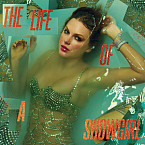
The track opens The Life of a Showgirl, Swift's 12th album. The cover art nods to John Everett Millais's 1850s painting Ophelia, which depicts the doomed heroine floating among the flowers. But where Millais's Ophelia is fading into stillness, Swift's version keeps swimming. "The Fate of Ophelia" turns what was once a symbol of surrender into a story of survival. a woman who refused to drown because someone, finally, reached out a hand.
In an interview during Taylor Swift: The Official Release Party of a Showgirl, Swift said "The Fate of Ophelia" began with a file she keeps full of lyric fragments she's written over the years. "Some of them I'll look back on and be like, 'That was the dumbest line I've ever written,'" she laughed. "But sometimes you get something where you're like, 'Oh, that was actually pretty interesting.'"
During a writing session for the album, producer Shellback played her a chord progression that caught her ear and became the song's hook. Scanning through her lyric notes, Swift found the phrase "the fate of Ophelia" and realized it fit the rhythm perfectly. From there, the concept took shape.
Swift directed the music video for "The Fate of Ophelia", playing multiple versions of herself, or, as she put it, "several sides." It opens with a visual nod to John Everett Millais' 1851 painting of Ophelia, then moves through lavish scenes where Swift transforms into a Golden Age Hollywood leading lady, a 1960s go-go dancer, and the modern Swift showgirl fans know from her Eras Tour.
"The idea I came up with for this music video was sort of a journey through all these different ways in which, throughout history, you could be a showgirl," Swift explained at its theatrical premiere. "Like, how you would be in the public eye back during the 1800s, when you'd sit for a Pre-Raphaelite painting. Or you could be a showgirl by being a cabaret or burlesque performer. You could be a theatrical actor putting on a performance. You could be a Vegas showgirl."
"The Fate Of Ophelia" became the most-streamed song in a single day in Spotify history upon its release on October 3, 2025, with 30,987,370 global streams. The previous record was held by Taylor Swift herself, for the song "
Fortnight" featuring Post Malone, which set the record in April 2024 with over 25 million first-day streams.
"The Fate of Ophelia" became Swift's 13th #1 on the Hot 100, placing her third behind Mariah Carey (19) and Rihanna (14) as the solo female artists with the most chart-toppers.
The song topped the charts worldwide. In Spain, it became the first English-language #1 single since Sia's "
Cheap Thrills" in 2016.