Night Train

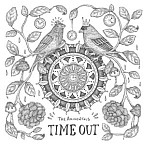
Album: TIME OUT (2021)
Play Video

Songfacts®:

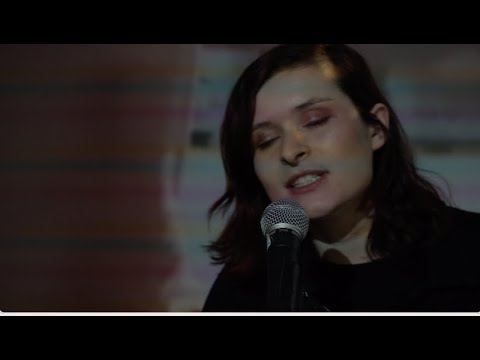
  • In "Night Train," Accidental Katie Larson sings about riding a train across the United States, meeting people along the way, and contemplating the future of the nation. These simple things were given extra emotional weight by the time when they were written and recorded, as The Accidentals brought the song to life during the 2020 COVID-19 pandemic.

    From the depths of social isolation, the simple joy of friendly encounters with strangers became something profound, and the future of the world did indeed look highly uncertain.

    While Larson sings the song into life, the train-ride story is actually from co-writer Dar Williams, who had been a notable singer-songwriter since the 1990s. The Accidentals and Williams first met while playing the Sisters Folk Festival and then ran into her repeatedly afterwards. That eventually led to co-writing "Night Train" over Zoom.

    "We just kept running into each other," Accidentals frontwoman Sav Buist told Songfacts. "Some things just happen the way they are meant to happen. The co-write was a lot like that."
  • In her interview with Songfacts, Buist called "Night Train" one of the band's favorite songs of their own work.
  • The half dollar coin in the sky shines with Kennedy's call

    This is presumably a reference to John F. Kennedy, the 35th President of the United States. The "call" being referred to is likely Kennedy's call to Americans to, "Ask not what your country can do for you, but ask what you can do for your country." Kennedy said those words during his Inaugural Address on January 20, 1961.

    Kennedy was one of the most divisive (not necessarily through any fault of his own) presidents in American history, inspiring fierce hatred from some parts of America as much as he inspired love and devotion from others. This was to be expected in one sense as he had one of the narrowest presidential victories in American history and won only a very slight majority of the popular vote, but he also stood in the middle of several hot-button issues that were boiling up by the time the early '60s arrived.

    Those who loved Kennedy saw him as a force for good in terms of civil rights, peace, and the destruction of old racial norms. Few, if any, presidents have inspired as much loyalty and love as Kennedy did among his faithful.
  • Whatever the precise intent of the Kennedy line, the song ends on a hopeful note.

    We're passing the salvage yard, into the morning light
    I'm taking my time, this country of mine, we'll get it on track


    That was ultimately the intent with "Night Train." It's a rallying cry for America to find its common ground and unity. At a time of great friction, its positive messaging was courageous. A good portion of the country had no desire to unify, and dour pessimism had the path of least resistance in the national zeitgeist.

Comments

Be the first to comment...

Editor's Picks

Metallica

MetallicaFact or Fiction

Beef with Bon Jovi? An unfortunate Spandex period? See if you can spot the true stories in this Metallica version of Fact or Fiction.

Marvin Gaye

Marvin GayeFact or Fiction

Did Marvin try out with the Detroit Lions? Did he fake crazy to get out of military service? And what about the cross-dressing?

Jason Newsted (ex-Metallica)

Jason Newsted (ex-Metallica)Songwriter Interviews

The former Metallica bassist talks about his first time writing a song with James Hetfield, and how a hand-me-down iPad has changed his songwriting.

Dan Reed

Dan ReedSongwriter Interviews

Dan cracked the Top 40 with "Ritual," then went to India and spent 2 hours with the Dalai Lama.

Little Big Town

Little Big TownSongwriter Interviews

"When seeds that you sow grow by the wicked moon/Be sure your sins will find you out/Your past will hunt you down and turn to tell on you."

Brandi Carlile

Brandi CarlileSongwriter Interviews

As a 5-year-old, Brandi was writing lyrics to instrumental versions lullabies. She still puts her heart into her songs, including the one Elton John sings on.