You're Like A Woman

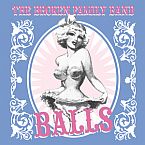
Album: Balls (2006)
Play Video

Songfacts®:

  • According to Mirriam-Webster Dictionary online, the word "like" can be a verb, a noun, an adjective, a preposition, an adverb, a conjunction, and a verbal auxiliary. Even with all those choices, it is tough to define how Americans have taken the word and, like, Americanized it.
    So it stands to reason that a British band writing and singing in an American accent would tack that word into a song, grin mischievously whenever they sing it, and never let on the fact that "you're like a woman" does NOT mean "you resemble a woman."
    "Originally it was supposed to be funny because I was getting sick of writing songs in my head in an American accent," explains Steve Adams, "knowing that I was gonna sing songs in an American accent. And I thought it would be something an American would say; an English person would say, 'You're a woman,' and an American would say, 'You're, like, a woman.' No one ever picks up on that. If you put in stupid private jokes, people rarely pick up on them, and you end up forgetting them yourself."
  • "This must happen to a lot of people," explains Adams, "you start writing a song about one thing and then you kind of get sidetracked and you end up writing a song about another thing, and the two things get mixed up in the lyrics. And one part of it, the beginning of it, is about my ex-girlfriend, and the policeman, which is all true. And then I kind of made up stuff about going on."

    In hindsight, he says, this song is also about the awkward part of a first date, when you realize "she's better at picking the wine."
  • Steve explains why they began life as the Broken Family Band singing with an American accent: "Well, because we started as a Country group, and we were doing it for fun and stuff. And it seems like it was the furthest thing I could do that was away from what I'd done before. I'd been in really earnest indie bands, being quite shouty and not singing particularly well, and I wanted to sing better, and I always found that if I sang in the shower I always sang American songs, because almost all the bands were American. So I'd end up singing in an American accent. And I think it's something to hide behind, and it took me about five years to realize that I was actually hiding behind it. And I think it really annoys a lot of people over here, and it's probably done us quite a lot of damage in terms of getting anywhere, because there's nothing cool about putting on an accent. And I didn't make it easy for us, because I never pretended to be like an American wannabe or anything. The interesting thing is that it's never annoyed any Americans that I know of. I don't think they can tell. A Texan friend of mine once said, 'You sound like a New Yorker pretending to be from Tennessee,' which I thought was the kindest thing anyone could say.
    I think we probably would have been more successful had I not stuck to my guns. Just before we went to record our first record, I asked someone if I could sing all the songs in an English accent, and they said, 'No, you sound more miserable when you sing in English, why don't you do it in American? You might sound more cheerful.' Once we'd done one record, I thought we were stuck with it. But I dropped it on the last record, mostly, and the new one we just finished doing (Please and Thank You) there's no accent on it." (Read the full interview with Steve Adams)

Comments

Be the first to comment...

Editor's Picks

Randy Newman

Randy NewmanSongwriting Legends

Newman makes it look easy these days, but in this 1974 interview, he reveals the paranoia and pressures that made him yearn for his old 9-5 job.
Verdine White of Earth, Wind & Fire

Verdine White of Earth, Wind & FireSongwriter Interviews

The longtime bassist of Earth, Wind & Fire discusses how his band came to do a holiday album, and offers insight into some of the greatest dance/soul tunes of all-time.
Billy Gould of Faith No More

Billy Gould of Faith No MoreSongwriter Interviews

Faith No More's bassist, Billy Gould, chats to us about his two new experimental projects, The Talking Book and House of Hayduk, and also shares some stories from the FNM days.

Dar Williams

Dar WilliamsSongwriter Interviews

A popular contemporary folk singer, Williams still remembers the sticky note that changed her life in college.

Edwin McCain

Edwin McCainSongwriter Interviews

"I'll Be" was what Edwin called his "Hail Mary" song. He says it proves "intention of the songwriter is 180 degrees from potential interpretation by an audience."
Country Song Titles

Country Song TitlesFact or Fiction

Country songs with titles so bizarre they can't possibly be real... or can they?