The Magnificent Seven

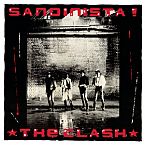
Album: Sandinista! (1980)
Charted: 34
Play Video

Songfacts®:

  • This song started with very simple origins. The first seeds were sown by Ian Dury and the Blockheads' bassist Norman Watt-Roy. "Jonesy said, 'we need something funky 'cos Joe wants to do a rap.' Joe wrote all the words right there, totally spontaneous. A few hours later it was in the can," noted Watt-Roy in a 1991 interview.

    At the time, bassist Paul Simonon was busy starring in a film called Ladies and Gentlemen, the Fabulous Stains playing a bassist in a punk band (hardly a stretch of his acting abilities!) alongside Sex Pistols members Paul Cook and Steve Jones and respected British actor Ray Winstone. As sessions for Sandinista! started, The Clash needed a bassist to fill in while Simonon was away filming. Watt-Roy was present, and ended up writing the bassline for "The Magnificent Seven" as well as the similar song "Lightning Strikes (Not Once But Twice)."

    There was mild controversy after the Sandinista! record was released due to every song having a generic "The Clash" writing credit, which failed to take into account major songwriting contributions from outsiders, such as in this song.
  • The title comes from John Sturgess' 1960 Western movie of the same name. The lyrics were written and recorded stream-of-consciousness style at the Electric Lady studio in March 1980, early on in the Sandinista! sessions. It's held together by the wraparound of one guy's boring working day ("Ring! Ring! It's 7:00 A.M.! Move yourself to go again"), regularly veering off to discuss other topics including commercialism and manipulative advertising ("Working for a rise, better my station, take my baby to sophistication") and looking to police brutality and oppression for distractions in the lunch break ("What do we have for entertainment? Cops kickin' Gypsies on the pavement"). It then puts historical freethinkers into contemporary everyday situations: Karl Marx has to borrow money from Friedrich Engels at a 7-11 store checkout, and Martin Luther King and Mahatma Gandhi go to watch their football team - who get thrashed 50-0 (so much for world peace when your team get murdered in the championship game). The final lines mimic a newscast's "and finally" news story which is traditionally more lighthearted. This is known in business as a "kicker story," and is something along the lines of ostrich races or "News Flash: Vacuum Cleaner Sucks Up Budgie, Oooohh...bub-bye!"
  • With a little imagination, Joe Strummer's vocal delivery can be considered "rapping," which would make it the first rap track ever written by a white rock band under this loose interpretation - it was recorded in March 1980, six months before Blondie's own attempt at the genre with "Rapture."

    Rap was emerging in the New York music scene when The Clash arrived in town to record Sandinista!, and guitarist Mick Jones really got into the genre, carrying a boombox around and garnering the nickname 'Whack Attack' from his bandmates. "When we came to the US, Mick stumbled upon a music shop in Brooklyn that carried the music of Grandmaster Flash and the Furious Five, the Sugarhill Gang... these groups were radically changing music and they changed everything for us," noted Strummer.

    The Clash so appreciated these rap artists that they had Grandmaster Flash and the Furious Five open for them at a New York concert in 1981. Clash fans were not as receptive as the band hoped, and the rappers' set was a disaster, even making our list of the most Incongruent Opening Acts.
  • "The Magnificent Seven" didn't do that well commercially, failing to chart in the US and reaching #34 in the UK. However, it became hugely popular on New York radio stations. It helped that the band created a mostly instrumental remix, "The Magnificent Dance," in February 1981. R&B and rap stations, including WBLS in New York City, not only played the song in heavy rotation, but produced their own remixes by sampling in dialogue from films (including one remix with lines from the movie Dirty Harry). The band were both proud and amused by the popularity of the song. As Strummer noted in the Westway to the World documentary, "that was us, weirdo punk-rock white guys. Doin' the kit!"
  • The song became a concert favorite and remained in the band's set right from it's first appearance in April 1981 to the end of their existence. Like in "Capital Radio" or "London's Burning," Joe Strummer loved to improvise lyrics on this one, which is demonstrated in the live version of the song included on the From Here to Eternity live compilation, recorded in Boston in September 1982. In this performance, Strummer admits mid-song that the ad-libbing was getting a bit out of hand ("I know this song is 20 minutes long").
  • This has been covered numerous times, with its simple core structure allowing for many different versions. Covers have been done by THC (1999), The Max Weinberg 7 (on The Tonight Show with Conan O'Brien), and the Kokolo Afrobeat Orchestra.

    2manyDJs created a remix version by taking the instrumental and adding in vocals from Basement Jaxx's "Romeo" to create "The Magnificent Romeo."
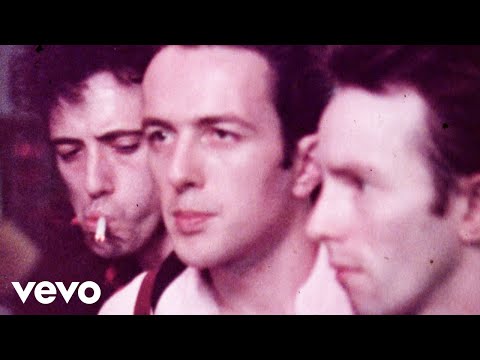
  • Filmmaker, DJ and longtime Clash associate Don Letts created a video for the song, which was released in December 2020. The clip combines unearthed footage of The Clash performing the track on their June 1981 appearance on NBC's talk show The Tomorrow Show with Tom Snyder. It is mixed with archival shots of the group members in and around Manhattan during their 17-night residency at Bond's International Casino.

Comments: 2

  • JjI think the Magnificent Seven is an allusion to the Wild West movie, yes, in that Strummer wrote the song in New York, USA, and due to the reference “like cowboys do in tv land!”
    I think it’s a song about the drudgery and wage-slave-labor trap of the capitalist “the magnificent seven” 7 days of the week: hence it starts with “ring ring, seven am/ move yourself to go again”. Or it could be the magnificent 7am… when workers rise for their work day.
    Then followed with references to the failed attempts at righting societal wrongs, such as the exploitation of workers, and the assassination of MLK. “Luther King and Mahatma Gandhi went to the park to check out the game”, as they tried to join “the game”, but instead “they were murdered by the other team,” the other team being racism and capitalism, “who went on to win 50 nil.” The following line, for me, is the point of the whole song: “you can be true, you can be false/ but you’ll be given the same rewards.” And when Strummer says, “Socrates and Mulhouse Nixon,” both came the same way, through the kitchen,” meaning they were reared in the “kitchen” of western culture, and that whether your Plato the Greek or… (a tv dog actor), history will remember the most popular, and that’s it. Great song.
  • David L. from Denver, CoI seriously doubt the song title was inspired by the movie of the same name. I believe the title is a reference to The Magnificent Seven bridges of London, bridges that cross the Thames river, some of which date back more than 150 years. People that live on the south side of the Thames are deemed as being from, “the wrong side of the river.” Also know as poor people. The song is largely about the drudgery of going to a job every day, crossing over the river into, “acceptable society.” What evidence do you have that the movie title has inspired the song title?
see more comments

Editor's Picks

Does Jimmy Page Worship The Devil? A Look at Satanism in Rock

Does Jimmy Page Worship The Devil? A Look at Satanism in RockSong Writing

We ring the Hell's Bells to see what songs and rockers are sincere in their Satanism, and how much of it is an act.

Bryan Adams

Bryan AdamsSongwriter Interviews

What's the deal with "Summer of '69"? Bryan explains what the song is really about, and shares more of his songwriting insights.

Rush: Album by Album - A Conversation With Martin Popoff

Rush: Album by Album - A Conversation With Martin PopoffSong Writing

A talk with Martin Popoff about his latest book on Rush and how he assessed the thousands of albums he reviewed.

Spooner Oldham

Spooner OldhamSongwriter Interviews

His keyboard work helped define the Muscle Shoals sound and make him an integral part of many Neil Young recordings. Spooner is also an accomplished songwriter, whose hits include "I'm Your Puppet" and "Cry Like A Baby."

Gary Brooker of Procol Harum

Gary Brooker of Procol HarumSongwriter Interviews

The lead singer and pianist for Procol Harum, Gary talks about finding the musical ideas to match the words.

Who's Johnny, And Why Does He Show Up In So Many Songs

Who's Johnny, And Why Does He Show Up In So Many SongsSong Writing

For songwriters, Johnny represents the American man. He has been angry, cool, magic, a rebel and, of course, marching home.