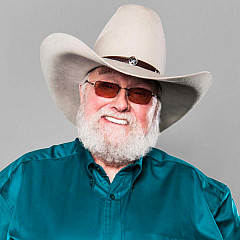
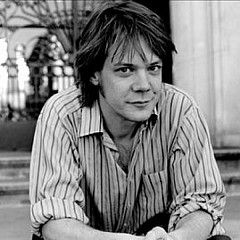
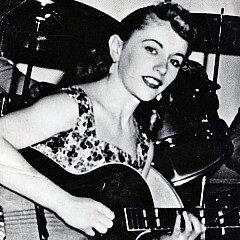
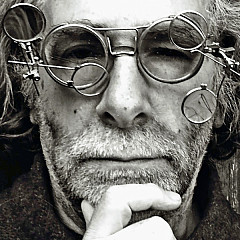
1976 - Robert SmithVocals, Guitar1976 -
Simon GallupBass, Keyboards1979 - 1982, 1985 - 2021, 2021-
Roger O'DonnellKeyboards, percussion1987 - 1990, 1995 - 2005, 2011 -
Jason CooperDrums1995 -
Reeves GabrelsGuitar2012 -
Lol TolhurstDrums, Keyboards1978-1989
Perry BamonteGuitar, Keyboards1990–2005, 2022–2025
The band formed in 1976 in West Sussex, England. They were the product of several lineup and band name changes among school friends Robert Smith, Michael Dempsey, and Lol Tolhurst. They initially began a band, The Obelisk, for a one off performance, before forming Malice. They then became Easy Cure and signed a contract with German Label Hansa Records.
Refusing to record covers, the group were dropped from the label. They renamed themselves The Cure and were picked up by the Fiction record label. Fiction released the band's debut album Three Imaginary Boys in 1979.
Before playing local pubs like the Rocket in Crawley and the Cambridge in Horley, the band played dances at their Methodist church, where they were members of the youth club.
Their second album, Seventeen Seconds (1980), and their fourth, Pornography (1982), established the band's gothic rock sound, influenced by the members nihilistic attitudes at the time. Touring the Pornography album, they adopted their signature style of wild hair and smeared lipstick.
They chose their band name using a technique one of their heroes, David Bowie, sometimes used to compose lyrics: cutting up phrases and selecting one randomly. The one they pulled out of a hat was "Easy Cure," part of a lyric to a song they were working on. Robert Smith later convinced them to change it to "The Cure," as it sounded more punk.
In 1983 the band adopted a more pop-based sound at the demand of Polydor scout Chris Parry, who was concerned about tensions within the band following the departure of bassist Simon Gallup. The change in direction spawned the band's first UK Top 10 hit with "
The Love Cats."
In 1989 members of the band demanded the dismissal of Tolhurst, whose alcoholism was, according to Smith, "detrimental to everything we'd do." (
NME, 1989). After Tolhurst's departure, Smith was the only remaining original member.
The same year, The Cure released their ninth album,
Disintegration. The record featured "
Love Song," the group's biggest American hit, charting at #2 in the Billboard Hot 100.
In 1992, The Cure released their 10th album,
Wish, which reached #1 on the UK chart, helped along by the success of one of their signature songs, "
Friday I'm In Love."
Wish was nominated for the Best Alternative Music Album Grammy award, but lost to
Bone Machine by Tom Waits. Their 2000 album
Bloodflowers was also nominated in that category, losing to
Kid A by Radiohead.
The band contributed the song "More Than This" to the soundtrack for the 1998 science fiction thriller The X-Files.
In 1986, the band re-signed with the Fiction label in a deal that gave Smith exclusive control of the band, essentially making co-founder Tolhurst an employee. They left Fiction in 2001 and were signed by Geffen Records in 2003. They released a self-titled album in 2004.
In 2009, The Cure received an NME award for Godlike Genius.
In 2012, the band headlined Reading and Leeds festival.
Robert Smith appears in the 1998 "Mecha-Streisand" episode of the American animated comedy South Park, providing the voice for his own character. The show's creators are big fans of The Cure and were thrilled to have him on the show; for Smith, it gave him credibility amongst his many nieces and nephews who loved the show.
Smith and Tolhurst were 5 years old when they first met at St. Francis of Assisi School in Crawley.
After Tolhurst was fired in 1989, he filed a lawsuit that wasn't decided until 1994, when he lost the case. The proceedings were acrimonious and pitted him against his childhood friend Smith. Years later, they buried the hatchet and Smith had Tolhurst join the band for some shows in 2011 where they played their first three albums in their entireties.
Robert Smith was asked to do the soundtrack of the Tim Burton movie Edward Scissorhands but had to decline as he was busy recording. It didn't stop the lead actor Johnny Depp from basing his hair on Smith's coiffure.
Robert Smith told his record company that he had a fear of flying, so The Cure traveled to America on cruise liners such as the QE2 instead.
The Cure released an album in 2008 called 4:13 Dream but waited 16 years to put out their next one, Songs Of A Lost World, in 2024. This wasn't a hiatus. They were still playing shows (mostly festivals) during this time, but Robert Smith had a hard time paring down the songs he'd written and getting the album to the finish line. He had to kill some darlings - he says some of his favorite songs didn't make the cut.
The Cure didn't win their first Grammy Award until 2026, when they earned two: Best Alternative Music Performance for "
Alone" and Best Alternative Music Album for
Songs of a Lost World. They skipped the ceremony to attend the funeral of their longtime bandmate Perry Bamonte, who died about six weeks earlier.