I Don't Believe You Want To Get Up And Dance (Oops)

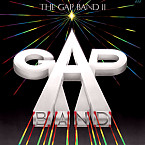
Album: The Gap Band II (1979)
Charted: 6 102
Play Video

Songfacts®:

  • The song is best known as "Oops Upside Your Head," the hook that repeats over and over, but the official title on the album is the less memorable "I Don't Believe You Want To Get Up And Dance (Oops)," and on the single it's the even more cumbersome "I Don't Believe You Want To Get Up And Dance (Oops, Up Side Your Head)."

    It's a dance-floor filler, a party jam that was huge in places willing to play funk music in the waning days of disco. It wasn't a big pop hit though, topping out at #102 on the Hot 100. Many people discovered it much later when Snap! reworked it into their 1990 hit "Ooops Up."
  • The single version runs a compact 3:29 and is mostly a repetition of the chant "say oops upside your head say oops upside your head" and the line, "I don't believe that you wanna get up and dance."

    The album version is much more expansive. Running 8:31, it incorporates bits of the nursery rhymes Humpty Dumpty and Jack And Jill, and lets the groove run free. This is the version that was usually played in the clubs.
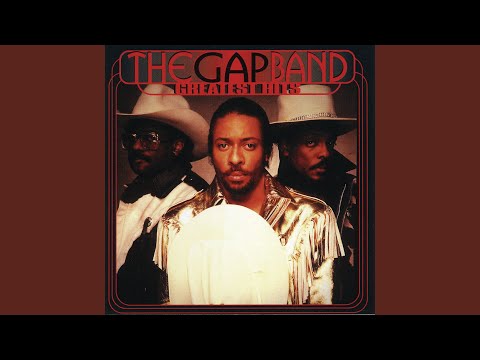
  • The Gap Band were the three Wilson brothers from Tulsa, Oklahoma - Ronnie, Charlie and Robert. Charlie was the lead singer and did a lot of the songwriting along with their producer, Lonnie Simmons, and their sound mixer, Rudy Taylor. "Oops" was written by Taylor, Simmons, Robert and Charles Wilson.

    Robert Wilson died of a heart attack in 2010, bringing the band to an end.
  • The Gap Band made lots of good-time music you could dance to, but like Earth, Wind & Fire, the songs often carried a deeper message. "Oops" has themes of liberation and freedom, but also a warning about the importance of contraception:

    Jack and Jill went up the hill to have a little fun
    Stupid Jill forgot her pill, and now they have a son


    "You had to really sit down and listen to 'Oops Upside Your Head,' 'cos there was a deep message in that song," Robert Wilson of The Gap Band told New Musical Express in 1987. "A lot of people didn't listen to it for the message... they listened for the groove and the chants."
  • This track borrows a chant from the P-Funk family, with "the bigger the headache, the bigger the pill" from the 1976 Parliament song "Dr. Funkenstein."
  • The Gap Band was starting to build their audience when this song was released in 1979 on The Gap Band II, which was actually their fourth album - their first two they tried to forget. On their next album, released in 1980 and conveniently titled The Gap Band III, they had a big hit with "Burn Rubber On Me (Why You Wanna Hurt Me)," which went to #1 on the R&B chart.
  • DJ Casper of "Cha Cha Slide" fame remixed this song in 2004 with the title "Oops Upside Your Head." This version got its own music video.

Comments

Be the first to comment...

Editor's Picks

Scott Gorham of Thin Lizzy and Black Star Riders

Scott Gorham of Thin Lizzy and Black Star RidersSongwriter Interviews

Writing with Phil Lynott, Scott saw their ill-fated frontman move to a darker place in his life and lyrics.

Marc Campbell - "88 Lines About 44 Women"

Marc Campbell - "88 Lines About 44 Women"They're Playing My Song

The Nails lead singer Marc Campbell talks about those 44 women he sings about over a stock Casio keyboard track. He's married to one of them now - you might be surprised which.

Andrew Farriss of INXS

Andrew Farriss of INXSSongwriter Interviews

Andrew Farriss on writing with Michael Hutchence, the stories behind "Mystify" and other INXS hits, and his country-flavored debut solo album.

Chris Fehn of Slipknot

Chris Fehn of SlipknotSongwriter Interviews

A drummer for one of the most successful metal bands of the last decade, Chris talks about what it's like writing and performing with Slipknot. Metal-neck is a factor.

Thomas Dolby

Thomas DolbySongwriter Interviews

He wrote "She Blinded Me With Science" so he could direct a video about a home for deranged scientists.

Superman in Song

Superman in SongSong Writing

Not everyone can be a superhero, but that hasn't stopped generations of musicians from trying to be Superman.