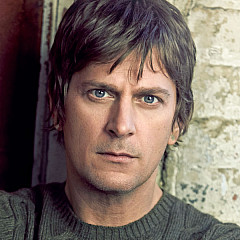
"Bastards Of Young" criticizes corporate America, modernity, and the Baby Boomer generation, all in one shot. It bears the oversimplified, melodramatic perspective one would expect from 26-year-old, perpetually disgruntled frontman, Paul Westerberg. Yet it also shows the subtle philosophical and emotional depth the Replacements are loved for.
The word "bastard" has multiple meanings. It can be a term for a despicable, unruly person. It's also a word for something that has been debased from its original form. Its original meaning was a person born to unwed parents, which used to be considered quite a terrible thing. It's unclear which meaning Westerberg is using in this song, and the ambiguity is amplified by the grammatically incoherent chorus:
Wait on the sons of no one, bastards of young
Now the daughters and the sons
Outside of that, the song is direct and straightforward.
God, what a mess, on the ladder of success
Where you take one step and miss the whole first rung
Dreams unfulfilled, graduate unskilled
It beats pickin' cotton and waitin' to be forgotten
Here's the disdain of youth looking upon corporate America - a very '80s thing to do. The verse is about selling out, surrendering to the Establishment's anonymity machine. In 1985, American culture shamelessly celebrated the corporate world. It's become one of the decade's defining qualities in retrospect. Much '80s music criticized that celebration (as well as television, the mouthpiece of corporate America).
Clean your baby womb, trash that baby boom
Elvis in the ground, no way he'll be here tonight
Income tax deduction, what a hell of a function
It beats pickin' cotton or waitin' to be forgotten
Here Westerberg takes us out of the universal distrust with which young men tend to see the world and gets specific. This song is targeted at the Baby Boomer generation. Boomers are generally defined as those born between 1946 and 1964, but the important distinction isn't dates so much as events. Boomers were those born to the generation that fought World War II.
Elvis Presley was the primary celebrity hero for the Boomer generation. It's hard for later generations to really understand the level of stardom Presley held. He was, truly, on a level by himself.
Unwillingness to claim us, ya got no warrant to name us
This line takes us back to the universal. Each generation feels disrespected and discarded by the prior. Well, up until the Millennials, when the whole of society elected to put an unfair and unbearable level of high expectations on kids and then promptly criticize them for failing to live up to those impossible and often nebulous expectations. Normally, the cycle of life is for the mature to bemoan "those damn kids" while the damn kids sulk, rebel, and revitalize through creative destruction.
The ones love us best are the ones we'll lay to rest
And visit their graves on holidays at best
The ones love us least are the ones we'll die to please
If it's any consolation, I don't begin to understand them
Here's a curious detour into self-criticism and analysis of a tragic aspect of human existence. It brings to mind a line from another classic work of '80s art, the film Stand By Me (1986), in which protagonist Gordie muses, "I wondered how Teddy could care so much for his dad, who practically killed him. And I couldn't give a s--t about my own dad, who hadn't laid a hand on me since I was three! And that was for eating the bleach under the sink."
That last verse takes the song out of mere youthful angst and elevates it to something else. It becomes a meditation on human existence in general as it plays out across all generations and all times.
The video for the song features a steady shot of a stereo speaker in a living room, the edge of a couch, a foot, a cigarette in someone's fingers, and then the legs of the faceless person as he stands, kicks the speaker over, and leaves the room. The video is black-and-white, a stylistic choice. The minimalism comes across as rebellion against the typical big-budget music video.
The "Bastards Of Young" video didn't get a lot of airplay, but according to Replacements biography Trouble Boys by Bob Mehr, it did create a lot of conversation among industry insiders. It presaged the long, combative relationship between MTV and the Replacements, who were always known for being unruly jerks - deliberately so.
Some have speculated that the chorus is actually, "We are the sons of Norway" (somewhat fitting, given the Minnesota birthplace of all members) but, (famously) as no lyric sheet was ever provided by the band, it remains speculation.
>>>
Suggestion credit:
John - Levittown, NY
In Trouble Boys, Mehr identifies the song as "residue of Westerberg's Catholic upbringing." He specifies an allusion to the Biblical gospel of Matthew and an exploration of the vacuousness of fame and fortune.
Westerberg's little sister Mary played into the song's inspiration. At 18 she'd left their Minneapolis home to take a crack at being an actress in New York City. Westerberg saw this as her need to fill an emotional gap with the love and praise of strangers.
"It is sort of the Replacements feeling the same way... not knowing where we fit," he says in Trouble Boys. "It's our way of reaching a hand out and saying, 'We are right along with you. We are just as confused.'"