Ghost Town

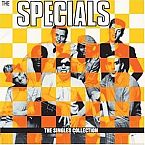
Album: The Singles Collection (1981)
Charted: 1
Play Video

Songfacts®:

  • The Specials keyboardist Jerry Dammers wrote and recorded this in a Tottenham, London apartment. On the surface, it is about the decline of Coventry, where the band grew up, but the latent meaning is quite different.

    The song was written just as three band members - Neville Staples, Lynval Golding and Terry Hall - were leaving The Specials to form Fun Boy Three. According to Dammers, the song was inspired by the band's split. He said in 2008: "'Ghost Town' was about the breakup of the Specials. It just appeared hopeless. But I just didn't want to write about my state of mind so I tried to relate it to the country as a whole."

    Many in the UK could relate. Coventry was a thriving industrial town in 1960s, but fell on hard times in the 1980s. "Ghost Town" caught the mood of Summer 1981 as levels of civil unrest not seen in a generation hit the UK.
  • The song was influenced by scenes noted during the band's UK tour. Dammers recalled in an interview in the music magazine Mojo, "In Liverpool, all the shops were shuttered up, everything was closing down. In Glasgow there were little old ladies on the streets selling their household goods."
  • "Ghost Town" was the seventh UK Top 10 for The Specials and their second #1, following "Too Much Too Young." The song wasn't even released as a single in America, where the band tried and failed to break through in 1980 with a tour and an appearance on Saturday Night Live. They learned that getting on the radio and placed in record stores there was nearly impossible because there was no classification for ska or two-tone, and they didn't fit under the aegis of pop, punk, reggae or rock. It wasn't until the '90s that America warmed to the sound they helped create.
  • Dammers took a year to write "Ghost Town" and "begged" his bandmates to record it to his specifications.
  • The lyric, "All the clubs have been closed down," refers to the Locarno in Coventry. The site is now the city library. (above two from Q magazine, March 2008)
  • This was featured in the 2000 Guy Ritchie-directed film Snatch.

Comments: 9

  • Kevin from New YorkLike another commenter, I first heard this song on 60 Minutes. It’s probably the first Ska I ever heard. I was 13 or 14 years old. I found this page while searching for the air date of that episode; it just popped into my head to wonder that.
  • John from Washington DcI first heard this song, and of The Specials, when it was featured in a 1981 article on the Brixton riots on CBS’ 60 Minutes.
  • T J Laurence from Luton UkThis song epitomised everything that was going wrong in the UK at the time. Thatcher, Police suss laws, Mass unemployment especially for school leavers (put onto government schemes Y O P ), The rise of the far right recruiting youth from the football terraces & dance-halls. The start of the have / have not society (Yuppies), Civil unrest & riots is most towns & city's. As the song sat on the no:1 spot Britain was burning, the powerful plotted & made there plans for destroying the working classes, & as a 16 year old I was there & lived it.
  • Sarah from UkThis is a protest song about the consequences of Thatchers Britain. Later when a black member of the Specials was attacked, it also became an anti racist anthem. The song is still relevant today in both respects
  • Thomas from Coventry, EnglandHave to say that while I'm too young to relate to the early 80s, the city is still quite empty, with LEVC being the largest employer other than the hospital I believe. The state of the town centre has only degraded, as now 'clubs' are just shisha bars full of 14-17 year olds. If it became a ghost town with everybody moving from the violence and lack of jobs, it's now a hideous Frankestein's monster of relics from a bygone age mixed with attempts at rejuvenation (masses of new houses).
  • Ross from Leicester, United KingdomI think it was a bit more confusing than that. The Specials set out to appeal to a skinhead audience, as they recognised that skinheads weren't necessarily racist, but that the National Front were having an influence on the scene. There were racist and anti-racist skinheads, and some of the racist skinheads were into ska! This was on top of a very violent live music scene which included fighting between different subcultures (punks,mods,skins,teds,metalheads,etc) as well as local rivalries. This effected a lot of gigs, not just the Specials - as the song says "too much fighting on the dancefloor"!
  • Richard from London, United KingdomI heard this song was about white racists adopting ska as part of their culture. This lead to fighting at gigs and clubs, and places being closed down and people not wanting to go out. I might be wrong.

    I also know John Collins who mixed and produced it. He told me he got a call out of the blue one day, he hadn't really done much work like this but took it on anyway. He said he didn't really fit in with the band. They were all smoking drugs and he wasn't into that. John went onto make the music for the 80's TV show 'Desmonds'. I've met quite a few people who have said this is their favourite ever record.
  • Kayla from N. Lauderdale, FlSeriously, my favorite ska song ever. I vibe to it when I can.
    Btw, this song is even featured in the movie "Garage Days."
  • Gary from Chester, EnglandThis song epitomises mine (and 1,000's others) youth. Remember the riots, even had few here !!
see more comments

Editor's Picks

Muhammad Ali: His Musical Legacy and the Songs he Inspired

Muhammad Ali: His Musical Legacy and the Songs he InspiredSong Writing

Before he was the champ, Ali released an album called I Am The Greatest!, but his musical influence is best heard in the songs he inspired.

Michael Sweet of Stryper

Michael Sweet of StryperSongwriter Interviews

Find out how God and glam metal go together from the Stryper frontman.

Devo

DevoSongwriter Interviews

Devo founders Mark Mothersbaugh and Jerry Casale take us into their world of subversive performance art. They may be right about the De-Evoloution thing.

Dennis DeYoung

Dennis DeYoungSongwriter Interviews

Dennis DeYoung explains why "Mr. Roboto" is the defining Styx song, and what the "gathering of angels" represents in "Come Sail Away."

Tom Bailey of Thompson Twins

Tom Bailey of Thompson TwinsSongwriter Interviews

Tom stopped performing Thompson Twins songs in 1987, in part because of their personal nature: "Hold Me Now" came after an argument with his bandmate/girlfriend Alannah Currie.

Evolution Of The Prince Symbol

Evolution Of The Prince SymbolSong Writing

The evolution of the symbol that was Prince's name from 1993-2000.