
How Could I Let You Get Away

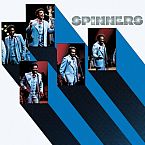
Album: Spinners (1972)
Charted: 77
Play Video

Songfacts®:

  • "How Could I Let You Get Away" was written by Yvette Davis, a songwriter who wrote two other songs on the album. Little is known about her, and there's no record of her talking about the song, but in a 1976 interview with Black Music magazine, Philippé Wynne of The Spinners, who sang lead on the track, explained that the song is written from the perspective of a woman who finds herself alone and pregnant. This sheds a lot of light on the perplexing lyrics, especially the chorus:

    In the middle of the room
    Got no time to count my sheep today
    How could I let you get away
    When I knew I'd need somebody soon


    She'll need the man she let get away to help raise the baby. This also explains the metaphors relating to childhood: Mother Goose, tin soldiers, the TV show Howdy Doody, etc.

    Without Wynne's insight, we would assume the lyric is from the perspective of a guy and describing a relationship that goes back a long way but didn't work out.
  • This was the first Spinners single for Atlantic Records, which they signed with in 1972 after nine years at Motown, where they had just a few modest hits, including "It's A Shame" and "I'll Always Love You." Atlantic paired them with Thom Bell, known for his work with The Stylistics and The Delfonics, whose downtempo songs were very much like "How Could I Let You Get Away." Atlantic released it as the first single over the objections of Bell, who wanted another song they recorded at the same session, "I'll Be Around," to come first - he wanted to get away from slow heartbreak songs, but Atlantic knew that was his specialty, so "I'll Be Around" was relegated to the B-side. "How Could I Let You Get Away" did fairly well, reaching #14 on the R&B chart and #77 on the Hot 100, but Bell felt very strongly about "I'll Be Around" and convinced the label to try it as a single. He was right: That uptempo track went to #1 R&B and #3 on the Hot 100, kicking off an impressive run of hits for the group.
  • When The Spinners left Motown, G.C. Cameron, who sang lead on "It's A Shame," stayed behind. He was replaced by Philippé Wynn, who sang lead on "How Could I Let You Get Away" and most of the group's other hits before leaving in 1977.
  • This was recorded at Sigma Sound Studios in Philadelphia, where the group's producer, Thom Bell, worked. Atlantic Records would contract out studios and producers, sending their artists anywhere they felt would be a good fit. This was a different strategy than Motown, which kept everything in house.
  • The house band at Sigma Sound Studios, MFSB, backed the Spinners on this one. They can be heard on many Philadephia soul tracks from artists like The O'Jays and Wilson Pickett.
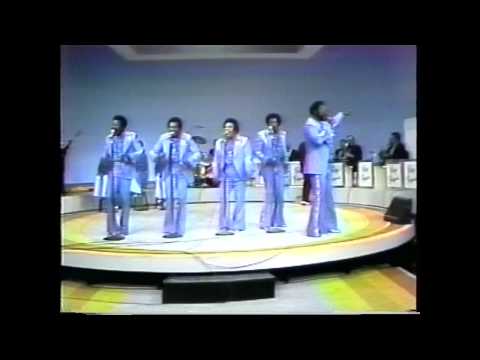
  • This was a live favorite for the band, which would do a choreographed routine to it. They would extend the breakdown, allowing Philippé Wynn to do a bit where channeled Sam Cooke, Al Green, and Otis Redding, doing runs of some of their songs in their styles. A huge crowd pleaser was when he would "go get Al Green." The group would wipe his brow and Wynn would go into preacher mode like Green was known for.

Comments: 1

  • Will from Bay AreaThank you so much for this explanation. Now I hear the song much differently.
see more comments

Editor's Picks

Art Alexakis of Everclear

Art Alexakis of EverclearSongwriter Interviews

The lead singer of Everclear, Art is also their primary songwriter.

La La Brooks of The Crystals

La La Brooks of The CrystalsSong Writing

The lead singer on "Da Doo Ron Ron" and "Then He Kissed Me," La La explains how and why Phil Spector replaced The Crystals with Darlene Love on "He's A Rebel."

Trans Soul Rebels: Songs About Transgenderism

Trans Soul Rebels: Songs About TransgenderismSong Writing

A history of songs dealing with transgender issues, featuring Pink Floyd, David Bowie, Morrissey and Green Day.

Lajon Witherspoon of Sevendust

Lajon Witherspoon of SevendustSongwriter Interviews

The Sevendust frontman talks about the group's songwriting process, and how trips to the Murder Bar helped forge their latest album.

Jon Anderson of Yes

Jon Anderson of YesSongwriter Interviews

From the lake in "Roundabout" to Sister Bluebird in "Starship Trooper," Jon Anderson talks about how nature and spirituality play into his lyrics for Yes.

Angelo Moore of Fishbone

Angelo Moore of FishboneSongwriter Interviews

Fishbone has always enjoyed much more acclaim than popularity - Angelo might know why.