Indian Outlaw

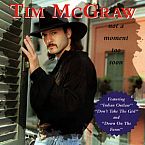
Album: Not a Moment Too Soon (1994)
Charted: 15
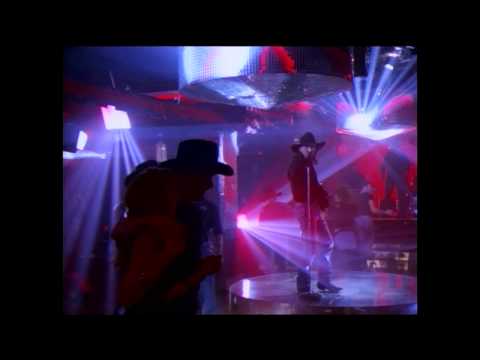
Play Video

Songfacts®:

  • This song finds Tim McGraw singing of a rebellious American Indian character. His fourth single overall, it was McGraw's first Top 40 Country hit. It peaked at #8 on the Country chart and #15 on the Billboard Hot 100.
  • The song was co-written by Tommy Barnes, who also penned a #1 Country hit the same year with Little Texas' "My Love." American rockabilly singer-songwriter Jumpin' Gene Simmons was the other co-writer. He is best known for his 1964 novelty single "Haunted House".
  • The tune's success surprised McGraw. "'Indian Outlaw' was sort of this novelty, weird-sounding song," McGraw recalled at a media event in 2016. "I moved to town in May, early May, of 1989; the same day Keith Whitley died was the day I moved to town. That night … I met [songwriter] Tommy Barnes... We sat up in a hotel room, and he played me 'Indian Outlaw' that night, the first night I moved to town, and I told him I was going to record that song."

    "It took me a while to get to it," McGraw continued. "I played that song in clubs forever, and it was just so different. I didn't know how people were going to take it. I didn't know it was going to work."
  • The song ends with McGraw shouting part of the main "Cherokee people" chorus from "Indian Reservation." The John D. Loudermilk-penned tune was a #1 pop hit for Paul Revere & the Raiders in 1970.
  • Tim McGraw first tried to record "Indian Outlaw" for his 1993 self-titled debut album, but the idea was swiftly vetoed.

    "The label didn't like it," McGraw recalled on The Tim Ferriss Show. The prevailing wisdom was that the song wouldn't get radio play and might even dent his credibility before he'd had the chance to build any. The only person firmly in his corner was producer Byron Gallimore.

    McGraw, however, had already road-tested the tune. After hearing Tommy Barnes perform it live in Nashville, he began slipping it into his own sets in honky-tonks and clubs. The reaction was immediate and loud. In some venues, the crowd response was so strong he'd play it more than once a night. Despite that, as a new artist without leverage, McGraw couldn't override the label's decision, and "Indian Outlaw" was left off his debut album.

    By the time he started work on his second album, Not a Moment Too Soon, he was determined not to let it slip away again. He knew it was a gamble. "I felt like this is either going to work in a huge way, or it's going to ruin my career forever," McGraw said.

    The risk paid off. Released as the album's lead single, "Indian Outlaw" became his first Top 10 hit on the Billboard country chart and was later certified Platinum, helping launch Not a Moment Too Soon into one of the biggest-selling country albums of the 1990s.

Comments

Be the first to comment...

Editor's Picks

Chris Tomlin

Chris TomlinSongwriter Interviews

The king of Christian worship music explains talks about writing songs for troubled times.

John Kay of Steppenwolf

John Kay of SteppenwolfSongwriter Interviews

Steppenwolf frontman John Kay talks about "Magic Carpet Ride," "Born To Be Wild," and what he values more than awards and accolades.

Martyn Ware of Heaven 17

Martyn Ware of Heaven 17Songwriter Interviews

Martyn talks about producing Tina Turner, some Heaven 17 hits, and his work with the British Electric Foundation.

Sugarland

SugarlandSongwriter Interviews

Meet the "sassy basket" with the biggest voice in country music.

Song Titles That Inspired Movies

Song Titles That Inspired MoviesSong Writing

Famous songs that lent their titles - and in some cases storylines - to movies.

Director Paul Rachman on "Hunger Strike," "Man in the Box," Kiss

Director Paul Rachman on "Hunger Strike," "Man in the Box," KissSong Writing

After cutting his teeth on hardcore punk videos, Paul defined the grunge look with his work on "Hunger Strike" and "Man in the Box."