Rum and Coca-Cola

Album: Capitol Collectors Series (1945)
Charted: 1
Play Video

Songfacts®:

  • During World War II, around 20,000 American GIs were stationed in Trinidad, ostensibly to deter any invasion. Unhappy with the situation, a local calypso musician named Rupert Grant, who went by the stage name of Lord Invader, wrote some lyrics commenting on how the American servicemen drank rum and coke, and then used their Yankee dollars to attract (or purchase the services of) the local women. The melody had been previously published as the work of Trinidadian calypso composer Lionel Belasco on a song titled "L'Année Passée," which was in turn based on a folk song from nearby Martinique. The track was a huge hit in Trinidad in 1943.
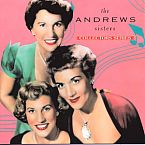
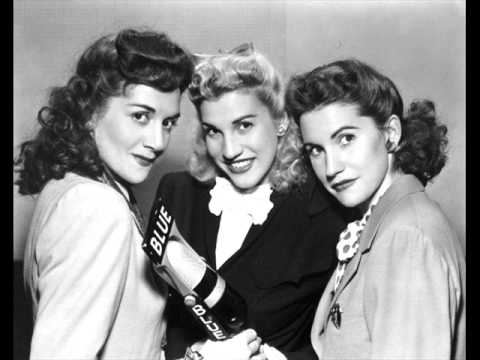
  • In 1945 the Andrews Sisters recorded a very similar song sung in hammy Trinidadian accents. It had the same title, general subject, and even some of the same lyrics but was stripped of its social commentary. According to Patty Andrews, "We had a recording date... we had some extra time and we just threw it in, and that was the miracle of it. It was actually a faked arrangement."
  • The Andrews Sisters' version became the biggest-selling song of the year and the third biggest of the decade in the United States. Despite its popularity, the song was controversial and was banned by network radio stations because it mentioned an alcoholic beverage and hinted at prostitution. The fact that it mentioned a commercial product by name also meant that it could be construed as free advertising when broadcast.
  • Entertainer Morey Amsterdam and two business associates were credited with writing the Andrews Sisters' version. In an ensuing court case, it was found that Amsterdam, who had visited Trinidad when Lord Invader's hit was current, had indeed copied the song, and the calypso singer won an $150,000 in compensation. However, Amsterdam was allowed to retain copyright to the song.
  • The Andrews Sisters cover of Lord Invader's song was the first American Calypso hit. The most famous song in that genre would come in 1956 with Harry Belafonte's version of "The Banana Boat Song (Day-O)." In 1957, six different artists charted in the Top 40 with covers of that song.
  • When Desmond Carrington played this song in January 2014 on his program The Music Goes Round, he said in the 1940s, the BBC banned the Andrews Sisters recording as advertising, adding that it is indeed, but it is not about a mother and daughter selling a certain fizzy drink but "selling something rather different. Nobody seemed to notice that, including the BBC, unless of course they did, but didn't dare to tell us." >>>
    Suggestion credit:
    Alexander Baron - London, England

Comments: 2

  • Ishaq from Karachi PakistanQuite different charming voices music astonished me so old great song.
  • Barry from Sauquoit, NyHere's an obscure facts:
    On March 12th 1894, Coca-Cola was sold in bottles for the first time, the first eight years that the drink was in existence it was sold only at soda fountains...
    And just under fifty-one years later on January 10th, 1945 "Rum and Coca-Cola"* by the Andrew Sisters peaked at #1 {for 8 weeks} on Billboard's Best Sellers in Stores chart...
    * The record that preceded it at #1 was "Don't Fence Me In" by Bing Crosby and the Andrew Sisters, and it also stayed in the top spot for 8 weeks.
see more comments

Editor's Picks

Gary Brooker of Procol Harum

Gary Brooker of Procol HarumSongwriter Interviews

The lead singer and pianist for Procol Harum, Gary talks about finding the musical ideas to match the words.

Don Felder

Don FelderSongwriter Interviews

Don breaks down "Hotel California" and other songs he wrote as a member of the Eagles. Now we know where the "warm smell of colitas" came from.

Allen Toussaint - "Southern Nights"

Allen Toussaint - "Southern Nights"They're Playing My Song

A song he wrote and recorded from "sheer spiritual inspiration," Allen's didn't think "Southern Nights" had hit potential until Glen Campbell took it to #1 two years later.

Donnie Iris (Ah! Leah!, The Rapper)

Donnie Iris (Ah! Leah!, The Rapper)Songwriter Interviews

Before "Rap" was a form of music, it was something guys did to pick up girls in nightclubs. Donnie talks about "The Rapper" and reveals the identity of Leah.

Al Kooper

Al KooperSongwriter Interviews

Kooper produced Lynyrd Skynyrd, played with Dylan and the Stones, and formed BS&T.
Emilio Castillo from Tower of Power

Emilio Castillo from Tower of PowerSongwriter Interviews

Emilio talks about what it's like to write and perform with the Tower of Power horns, and why every struggling band should have a friend like Huey Lewis.