
Girl, You'll Be A Woman Soon

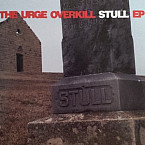
Album: Stull (1992)
Charted: 37 59
Play Video

Songfacts®:

  • "Girl, You'll Be a Woman Soon" was written and originally recorded by Neil Diamond in 1967. His version was a modest hit, going to #10 in the US, but nowhere near as popular as songs like "Cherry, Cherry" and "Sweet Caroline."

    Urge Overkill, a Chicago-based rock duo, were huge Neil Diamond fans and covered the song for their 1992 EP Stull because they needed one more song to fill it out. The EP was issued on an independent label and got little attention, but when the director Quentin Tarantino was traveling in Amsterdam, he picked up a copy of the EP and decided to use the Urge version in his 1994 movie Pulp Fiction.

    The song plays in a very memorable scene where Uma Thurman dances to it before she's felled by a heroin overdose. This brought lots of attention to the song, which was then released as a single.
  • As the song's writer, Neil Diamond had to agree to its use in Pulp Fiction, and at first he refused because the scene involved drug use, something Diamond didn't want his songs associated with. He reconsidered after reading the script and deciding that the movie could give his career an adrenaline shot like the one John Travolta administers to Uma Thurman.

    You see, Diamond wasn't exactly cool in 1994. He was still making music and performing, but his hits stopped coming in the early '80s and younger generations generally thought of him as a hokey singer their parents liked. That changed when this generation heard his very cool song in the very cool movie Pulp Fiction. As word got out that he wrote it (and Urge Overkill made that clear every chance they could), his stock rose and attitudes changed. Soon, crowds were singing along to "Sweet Caroline" at Fenway Park and doing karaoke to "Cracklin' Rosie." His concerts became multi-generational events, to his delight.
  • When Urge Overkill recorded this song, they didn't have a copy of it and did it from memory. That's one reason their version is drastically different from the original.
  • Urge Overkill are the duo of Nash Kato and Eddie "King" Roeser. They share lead vocals, with Kato out front on "Girl, You'll Be a Woman Soon."

    The group had a record deal by the time the song was used in Pulp Fiction, but they weren't able to ride the wave - their 1995 album Exit The Dragon was a flop and they split up in 1997. They returned to action around 2006 and in 2010 met Quentin Tarantino for the first time when they performed at a roast in his honor.

    Urge is fondly remembered in Chicago for some of their earlier music. Their 1992 song "Goodbye To Guyville" supplied Liz Phair with the title of her 1993 album Exile In Guyville.
  • The Pulp Fiction soundtrack also includes "Son Of A Preacher Man" by Dusty Springfield, "You Never Can Tell" by Chuck Berry, and several other classic songs. It sold over 3 million copies in America.
  • In a Songfacts interview, the guys from Urge Overkill talked about getting the offer to used the song in Pulp Fiction.

    King Roeser: "It got a second life. That record was part of our past. We got a call that the guy who did Reservoir Dogs was doing another movie. We got to screen the movie, and they had to convince us to put it in there because we were interested in our own songs. But if you notice the soundtrack, there's nobody else from our generation."

    Kato Nash: "When we got the call that they wanted to use the song we just assumed they wanted the Neil Diamond original, but they wanted our version. We couldn't believe it."
  • Neil Diamond rarely performed this song live until 1996, when he added it to his setlist thanks to renewed interest from the Urge cover.
  • The Scottish singer Edwyn Collins sounds a lot like Urge Overkill's Kato Nash, and in 1994 he released a similarly titled song called "A Girl Like You" that also has a very retro vibe. Those songs often get confused, and many are surprised to learn that "A Girl Like You" isn't on the Pulp Fiction soundtrack.

Comments

Be the first to comment...

Editor's Picks

Muhammad Ali: His Musical Legacy and the Songs he Inspired

Muhammad Ali: His Musical Legacy and the Songs he InspiredSong Writing

Before he was the champ, Ali released an album called I Am The Greatest!, but his musical influence is best heard in the songs he inspired.

Michael Sweet of Stryper

Michael Sweet of StryperSongwriter Interviews

Find out how God and glam metal go together from the Stryper frontman.

Devo

DevoSongwriter Interviews

Devo founders Mark Mothersbaugh and Jerry Casale take us into their world of subversive performance art. They may be right about the De-Evoloution thing.

Dennis DeYoung

Dennis DeYoungSongwriter Interviews

Dennis DeYoung explains why "Mr. Roboto" is the defining Styx song, and what the "gathering of angels" represents in "Come Sail Away."

Tom Bailey of Thompson Twins

Tom Bailey of Thompson TwinsSongwriter Interviews

Tom stopped performing Thompson Twins songs in 1987, in part because of their personal nature: "Hold Me Now" came after an argument with his bandmate/girlfriend Alannah Currie.

Evolution Of The Prince Symbol

Evolution Of The Prince SymbolSong Writing

The evolution of the symbol that was Prince's name from 1993-2000.