
Sister Havana

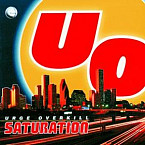
Album: Saturation (1993)
Play Video

Songfacts®:

  • Urge Overkill are best known for their version of the Neil Diamond song "Girl, You'll Be A Woman Soon," which was used in the 1994 movie Pulp Fiction. But before that, they were an up-and-coming Chicago band making inroads in alternative rock circles. "Sister Havana," the lead single to their 1993 album Saturation, is their most popular original song.
  • The core members of Urge Overkill are Nash Kato and King Roeser, who both sing, play a variety of instruments, and write songs. Their drummer at this time was Blackie Onassis.

    In a 2022 Songfacts interview with Kato and Roeser, Kato, who handles lead vocals on the track, explained how "Sister Havana" formed: "It sounded like a hook: 'sis-ter Ha-vana,'" he said. "Then the lyrics more or less wrote themselves. We didn't have any firm stance on America's relationship with Cuba, but it sang well and sounded like a hook. There was no political commitment.

    Roeser added: "In hindsight, you can see it as Urge's first foray into geopolitics. The protagonist, Urge, or the US, is trying to woo the woman, who could be Cuba."
  • The band was signed to Geffen Records, which spent big bucks on videos around this time, so they pitched the idea of shooting the "Sister Havana" video in Cuba, hoping they could get a trip there on the company's dime. Politics got in the way, so they settled for the Little Havana section of Miami as the video location.

    "We had a hell of a time," Roeser told Songfacts. "Probably a better time than we would have had in Cuba with all the red tape."
  • For many outside the Chicago area, this song was their introduction to Urge Overkill, thus the opening line, "Come around to my way of thinkin'."

    "That was our statement when we came out with our big record," Roeser said. "It was your invitation into Urge. We're going to take you on this trip, just come around to where we are. It worked on a lot of levels."
  • Urge Overkill started working out the music for this song in 1991 when they were on tour with Nirvana in Europe. They got a lot of support from Nirvana, and during one soundcheck, members of that band joined Urge as they hashed out the song. Nirvana's songwriting style rubbed off on them - Urge was impressed by how they could write songs that were very simple to play but could really connect with a crowd.
  • "Sister Havana" was well received, as was the Saturation album, and after their Pulp Fiction placement, it looked like Urge Overkill had a stepping stool to the next level. They released their next album, Exit The Dragon, in 1995, but the fans of "Girl, You'll Be A Woman Soon" didn't find what they were looking for among the tracks, and it stiffed. The group split up in 1997 and didn't start performing together again until 2004. They released their next album, Rock & Roll Submarine, in 2011, then waited 11 years to release their next one, Oui.

Comments

Be the first to comment...

Editor's Picks

Graham Nash

Graham NashSongwriter Interviews

Graham Nash tells the stories behind some of his famous songs and photos, and is asked about "yacht rock" for the first time.

Ralph Casale  - Session Pro

Ralph Casale - Session ProSongwriter Interviews

A top New York studio musician, Ralph played guitar on many '60s hits, including "Lightnin' Strikes," "A Lover's Concerto" and "I Am A Rock."

Rob Halford of Judas Priest

Rob Halford of Judas PriestSongwriter Interviews

Rob Halford dives into some of his Judas Priest lyrics, talking about his most personal songs and the message behind "You've Got Another Thing Comin'."

Corey Hart

Corey HartSongwriter Interviews

The Canadian superstar talks about his sudden rise to fame, and tells the stories behind his hits "Sunglasses At Night," "Boy In The Box" and "Never Surrender."

Incongruent Opening Acts

Incongruent Opening ActsSong Writing

Here's what happens when an opening act is really out of place with the headliner, like when Beastie Boys opened for Madonna.

Edwin McCain

Edwin McCainSongwriter Interviews

"I'll Be" was what Edwin called his "Hail Mary" song. He says it proves "intention of the songwriter is 180 degrees from potential interpretation by an audience."