This disco classic was inspired by a dance that was sweeping through New York City in the early '70s. There were many variations of the routine, but the original Latin hustle, which was developed by Puerto Rican teenagers in the Bronx and made its way into the popular nightclubs, was the basis of Van McCoy's hit. The songwriter/arranger was busy working on an album specifically designed to capitalize on the disco craze when he got wind of the dance. A DJ friend, David Todd, invited McCoy to see it in action at the Adam's Apple nightclub, but the songwriter sent his music partner, Charles Kipps, instead.
"When he came back, he showed me this very strange dance," McCoy recalled in an interview with Essence magazine. "It was something completely different from the you-do-your-thing-and-I-do-mine dances - it was people dancing together again. The hustle reminded me of ballroom dancing, and I love graceful dancing."
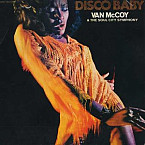
Still, McCoy wasn't really interested in writing a song about the hustle, because he thought it wasn't big enough outside the Latin market to give him a hit. But Kipps kept pushing the idea, so he finally relented and dashed off the song during the last hour of studio time. The final track written for Disco Baby, it was also the album's only single. To McCoy's surprise, it was a huge hit, going to #1 on both the Billboard Hot 100 and the Hot Soul Single charts in the US and topping tallies internationally.
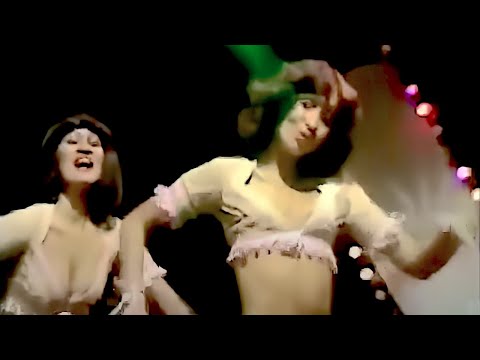
McCoy only had Kipps' description of the dance to go on, so he asked a couple girls in the studio office to do the hustle so he could get the rhythm right before he wrote the tune.
McCoy knew if he was going to ride the disco wave, he had to move fast: He completed the Disco Baby album in just two-and-a-half weeks.
According to Charles Kipps, the single was a catalyst for a new version of the dance. "Once 'The Hustle' became a hit, the dance took off, and it became kind of a different dance," he explained in The Billboard Book Of Number One Rhythm & Blues Hits. "The hustle I saw was a Latin hustle. When 'The Hustle' came out and it was much more soaring strings and pop and piccolo and all that stuff, people started doing a different kind of hustle spontaneously - which was more like a ballroom dance. So to that extent, the record did create a different dance."
McCoy originally played the acoustic guitar for the song's lead melody, but co-producer Hugo Peretti got the idea to have woodwind musician Philip Bodner play the piccolo instead. Other musicians on the track include Eric Gale and John Tropea on guitars, Steve Gadd and Rick Marotta on drums, Gordon Edwards on bass, Richard Tee on electric piano, McCoy on acoustic piano, and horn and string sections directed by Gene Orloff.
McCoy started out as a vocalist in The Starlighters, a doo-wop group he formed with his brother and a couple friends in the mid-'50s. By the end of the decade, he branched out on his own and released the single "Hey Mr. DJ," which peaked at #5 on the Cash Box chart in 1961. The success scored him a job as a staff writer and A&R man at Scepter Records, where he composed "Stop The Music" for the Shirelles. He went on to write tunes for many R&B acts, including Gladys Knight & The Pips ("Giving Up"), Ruby & The Romantics ("When You're Young And In Love"), Barbara Lewis ("
Baby, I'm Yours"), Jackie Wilson ("I Get The Sweetest Feeling") and David Ruffin ("Walk Away From Love").
But through his arrangements for The Stylistics, he worked with producers Hugo & Luigi, who tasked him to do an instrumental album,
Love Is The Answer (1974), on their Avco label. He followed up a year later with
Disco Baby.
The transition from writing ballads to dance numbers was a difficult one. In a 1976 interview with Black Music, McCoy explained why he got into disco music in the first place. "I suppose as a personal challenge, 'cause for years I've felt that disco groove, the big beat, has evaded me," he said. "At times that I was able to strike up a good groove, it was always the musicians I was working with. The combination of them rather than me being able to put down on paper the kind of groove that I thought was nice. So a matter of research and challenge I suppose, forced upon myself by my own inadequacy insofar as uptempo music was concerned. So I took the challenge and learned what rhythm was all about, listening to different drummers, listening to different guitar figures, what uptempo music was all about."
The single's success proved to be a double-edged sword for McCoy, who quickly grew tired of being labeled a disco artist. "Disco has played an important role in the development of my career," he told Billboard in 1977. "But I am seeking greater versatility. I do not want to be forever locked into the image of 'the disco kid.' I no longer want to be packaged and marketed as a specific product. Rather, I would prefer to evolve into the kind of entertainer I believe I am."
Unfortunately, McCoy's time was running out to reach his full potential. He died after suffering a heart attack in 1979 at age 39.
"The Hustle" won the Grammy Award for Best Pop Instrumental at the 1976 ceremony. One of the tunes it beat was the "
Theme from The Rockford Files."
This was used on four episodes of The Simpsons: "The Way We Was" (1991), "The Front" (1993), "The Twisted World Of Marge Simpson" (1997), and "This Little Wiggy" (1998).
It was also featured in these TV shows:
Young Sheldon ("The Grand Chancellor And A Den Of Sin" - 2021)
The New Girl ("Goosebumps Walkaway" - 2016)
Being Erica ("Sins Of The Father" - 2011)
American Dad! ("The Best Christmas Story Never Told" - 2006)
The O.C. ("The Chrismukkah That Almost Wasn't" - 2004)
Cold Case ("Daniela" - 2004)
Futurama ("Jurassic Bark" - 2002)
Everybody Loves Raymond ("High School" - 1997)
And these movies:
Trolls Band Together (2023)
Paint (2023)
The Lorax (2012)
Vampires Suck (2010)
Stuck On You (2003)
Out To Sea (1997)
Sister Act 2: Back In The Habit (1993)
The Spirit Of '76 (1990)