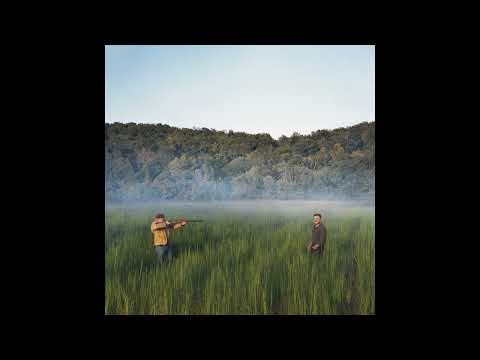
Dog Days

Album: Young Manhood and Other Donatable Organs (2026)
Charted: 53
Play Video

Songfacts®:

  • "Dog Days" finds Zach Bryan looking back at a reckless youth and pushing back against the low expectations others had for him. He acknowledges the mistakes he made during tumultuous times, while suggesting his rough edges come from a life where nobody handed him opportunities on a silver platter. Having been told from birth that he would never amount to anything, Bryan hopes that hard work has made him stronger. It is a defiant message from someone who heard the verdict and decided to carry on regardless.
  • The title refers to the dog days of summer, the hottest and most oppressive stretch of the season. Bryan turns the expression into a far less meteorological greeting:

    Welcome to the dog days, darlin'
    Welcome to hard times, too


    The implication is that difficult times are not some temporary inconvenience to be endured before life gets going. They are part of the deal.
  • Bryan is far from the first songwriter to find inspiration in the phrase "dog days." Its meaning varies across tracks, ranging from literal midsummer heat to the sort of prolonged misery that makes you wonder if things will ever improve.

    The Eagles' 2007 track "Waiting In The Weeds" observes, "Every dog will have his day. He never mentioned that these dog days get so long." The line takes the familiar promise that everyone eventually gets their moment of triumph and points out the inconvenient small print: the waiting can go on for an awfully long time.

    Florence + the Machine take a more optimistic approach in their 2008 hit "Dog Days Are Over." The repeated declaration that the dog days are finished signals the end of a bleak period and the possibility of a fresh start. Here, the expression is something to escape instead of settle into.

    Ron Sexsmith's 2013 song "Snake Road" looks back on a less admirable period with the line, "When I think about those dog days I was doing everybody wrong." His version is colored by regret, reflecting on a time when he treated people badly and was unfaithful.

    In Lucy Hale's 2014 track "From the Backseat," the phrase is more literal. The line "I was working on a lukewarm Coca Cola. In the dog days of July" places us right in the sticky heat of midsummer, holding a drink that has lost the will to refresh anybody.

    Drive-By Truckers use the expression in "Filthy and Fried" (2016), describing "Bored children caught between dog days when night turns them loose." The oppressive heat of summer becomes the backdrop for restless youngsters who find their freedom after dark, when the temperature finally gives them a break.

    Taylor Swift's "Evermore" (2020) uses the phrase to suggest a punishing stretch of life, contrasting "the frost" with "the violence of the dog days." The lyric captures the feeling of being tossed about by circumstances, like somebody attempting to stay upright in rough water.

    Drake's "Rich Baby Daddy" (2023) plays with the expression in the lines, "Take care of the dog. Until the dog days are over. The dog days are done." The wordplay fits the title of his album For All the Dogs, turning a familiar phrase for hard times into a callback to the record's canine theme.

    Bon Jovi's "Living Proof" (2024) takes a wearier view, declaring, "All that we've been given are the dog days." The phrase suggests a long, unrewarding stretch where better times are always promised for some vague future date while the present continues to disappoint.
  • "Dog Days" opens with an audio clip from the 2012 film The Place Beyond the Pines. Ben Mendelsohn's character delivers a warning to Ryan Gosling's character:

    If you ride like lightnin',
    You're gonna crash like thunder


    The line is a pointed introduction to Bryan's reflections on his wilder years, suggesting that a life lived at full throttle can end in a spectacular wreck if nobody learns when to ease off.
  • Bryan wrote the song himself and produced it with Jamie McLaughlin and his regular collaborator Eddie Spear. He also plays harmonica, a staple of his sound that pops up on earlier tracks like "Nine Ball" and "Runny Eggs."

Comments

Be the first to comment...

Editor's Picks

Yoko Ono

Yoko OnoSongwriter Interviews

At 80 years old, Yoko has 10 #1 Dance hits. She discusses some of her songs and explains what inspired John Lennon's return to music in 1980.

Petula Clark

Petula ClarkSongwriter Interviews

Petula talks about her hits "Downtown" and "Don't Sleep In The Subway," and explains her Michael Jackson connection.
Terry Jacks ("Seasons in the Sun")

Terry Jacks ("Seasons in the Sun")Songwriter Interviews

Inspired by his dear friend, "Seasons in the Sun" paid for Terry's boat, which led him away from music and into a battle with Canadian paper mills.
Harry Wayne Casey of KC and The Sunshine Band

Harry Wayne Casey of KC and The Sunshine BandSongwriter Interviews

Harry Wayne Casey tells the stories behind KC and The Sunshine Band hits like "Get Down Tonight," "That's The Way (I Like It)," and "Give It Up."
Glen Phillips of Toad the Wet Sprocket

Glen Phillips of Toad the Wet SprocketSongwriter Interviews

The "All I Want" singer went through a long depression, playing some shows when he didn't want to be alive.
Kerry Livgren of Kansas

Kerry Livgren of KansasSongwriter Interviews

In this talk from the '80s, the Kansas frontman talks turning to God and writing "Dust In The Wind."