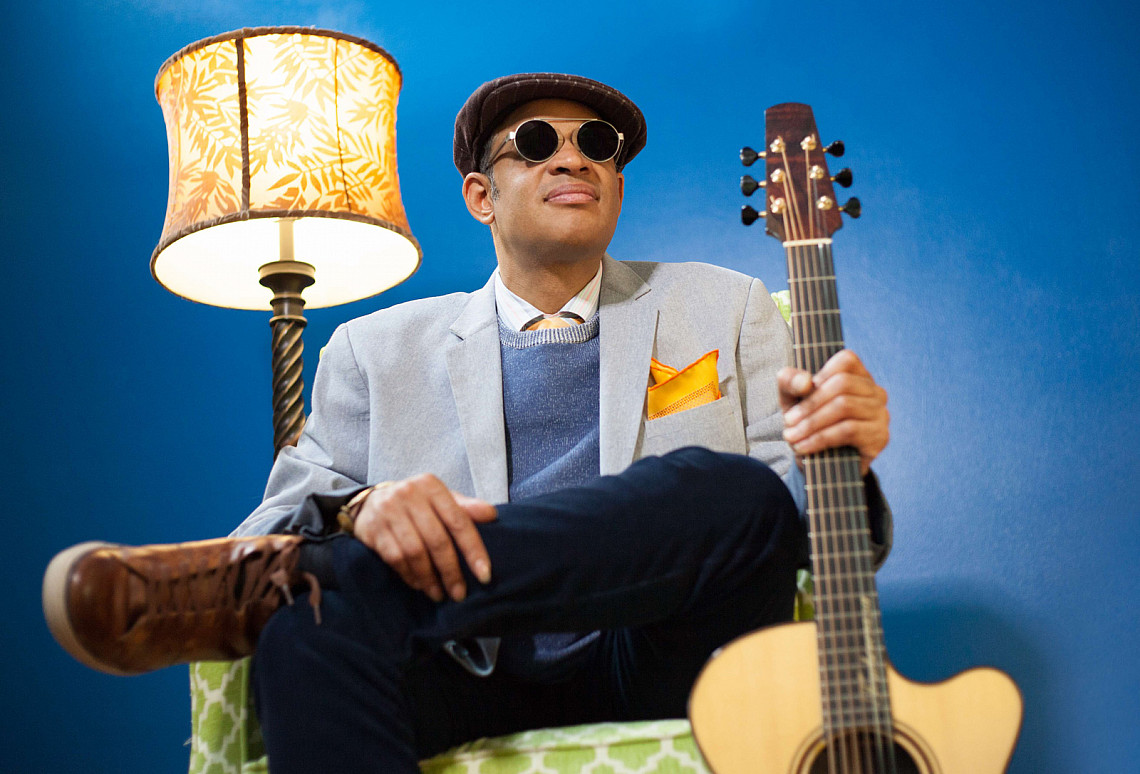
 The wildly inventive Raul Midón can command a stage all by his lonesome, often playing percussion and guitar while he sings. But on his 2018 album, If You Really Want, he got a little help... OK, a lot of help. He's joined on the set by Metropole Orkest, a boundary-busting Dutch orchestra that often collaborates with rock and jazz acts - they've played with Herbie Hancock, Bono and Brian Eno. It's the first time Midón worked with a full orchestra.
Blind since birth, Midón broke into the business as a session singer, appearing on tracks by Christina Aguilera, Enrique Iglesias, Alejandro Sanz and Marc Anthony. An insightful songwriter, he gets a lot of soundtrack work and has launched a successful solo career performing his own material. Four of the tracks on If You Really Want are new; the other six are new interpretations of his popular favorites, including the uplifting "Sunshine (I Can Fly)."
Soon after the release, Midón took some time to discuss the album, breaking down the lyrical inspirations for some of the key tracks.
Raul Midón: This is a song about flying in the face of "no." As a blind person, especially as a kid, people were always telling me that this or that was impossible. So this song is a kind of a mantra for me. It's an anthem to possibility.
Songfacts: The new album has you performing with the Metropole Orkest. What was that experience like?
Midón: Performing with Vince Mendoza and the Metropole Orkest was a truly transcendent experience. Being surrounded by all that beautiful sound put me in a kind of heavenly trance. It was like nothing I had ever experienced before.
Songfacts: The chorus for "Sunshine (I Can Fly)" would fit fine in a simple love song, but the rest of the lyrics give me an idea there's something much bigger going on in this one. Who or what is the "sunshine" you're addressing in this song?
My approach to writing the lyrics for the song was stream of consciousness within the rules of rhythm and rhyme. The chorus refers to love in a general way. Sunshine could be a good friend or a longtime lover.
Songfacts: "Suddenly" drops us smack dab in the middle of an epiphany, but you never tell us what led to that epiphany. What sparked this song for you?
Midón: "Suddenly" came to me after reading The Teachings of Don Juan by Carlos Castaneda. The idea was that every moment is an eternity. I remember sitting in silence listening to the rushing of time, and really grasping the meaning of that statement. The song came to me in a continuous torrent. Suddenly, I had a song.
Songfacts: The lyrics of "Ocean Dreamer" are beautiful - they'd work just fine as a poem without any music. What's the source of the story being told in that song?
Midón: "Ocean Dreamer" is about the mysterious state of sleep. Especially in places other than my own bed. Falling asleep and dreaming have always seemed like a continuation of the day to me. I ride on ocean waves from one world into another. This song was inspired by the beautiful soundscapes in the song "Paprika Plains" by Joni Mitchell.
Songfacts: "Ride On A Rainbow" is another of the new songs you wrote for If You Really Want. What inspired this one?
Midón: "Ride On A Rainbow" is about the power of the mind's eye to see beyond the ordinary. One of my interests, even as a young child, was shortwave listening. I would listen to flamenco coming directly from Spain and imagine myself riding on that radio wave.
Songfacts: I'd like to skip back to 2017 and the title track for Bad Ass And Blind. How would you sum up the message you're putting out with this one?
Midón: With the song "Bad Ass And Blind," I am communicating a kind of reconciliation with my disability. Until now I have maintained an ambivalent attitude as to my blindness. With this song I am saying I am blind and proud of my accomplishments as a blind person and you can be too, despite any obstacles which you may be facing.
Songfacts: "God's Dream" is kind of mysterious and multilayered. Can you talk about what this song's about to you?
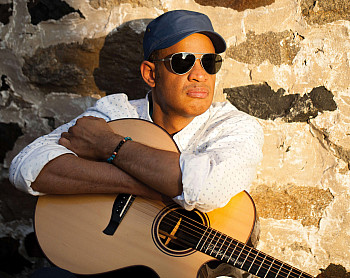 Midón: "God's Dream" is, in part, about the driving forces of ambition and desire. What would happen if you had everything? If there was nothing left to strive for? Would you then be free?
This song is also an exploration of my interpretation of the play JB, by Archibald MacLeish, based on the book of Job, in which Satan makes a bet with God that Job's faith would be shaken if he were bereft of his worldly possessions. If God is good, than he is not God. If God is God, then he is not good.
Songfacts: Is "Everybody Deserves a Second Chance" inspired by your own life?
Midón: "Everyone Deserves a Second Chance" is summed up in the title. Every one of us needs second chances.
Songfacts: You've talked about how you felt you were at a disadvantage in songwriting because lyric writing is usually very visual. At what point in your career did you find your way past this apprehension?
Midón: Songwriting is about telling stories, and I've just stopped worrying about the fact that I've never seen. I don't hesitate to use language that relies on the other senses to tell my stories. I can bring objects and situations to life with touch, taste, smell, hearing, and, most important of all, my imagination.
October 11, 2018
More at raulmidon.com
Photos: Samuel Prather (1), Blair Allen (2)
More Songwriter Interviews