Rocks And Gravel

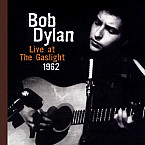
Album: Live At The Gaslight 1962 (1962)
Play Video

Songfacts®:

  • In "Rocks and Gravel," Bob Dylan uses road construction as a metaphor for needing a good woman's love. Just as rocks and gravel were an essential ingredient for a solid foundation for a road (according to Dylan, anyway), a good woman's love was the foundation for the satisfaction of Dylan's "weary soul."

    Takes rocks and gravel, baby, make a solid road
    Make a solid road
    Takes a good woman mama
    To satisfy my weary soul
  • The idea of a 20-year-old from a loving middle-class home crooning about his "weary soul" might seem ridiculous, but the song certainly doesn't sound that way. In "Rocks And Gravel," Dylan shows an early example of the power that would eventually make him a legend. He was like a spirit-channeler (and would later allude to being exactly that) summoning unimaginable depths of grief and sorrow from generations of ghosts of bluesmen of the past. The song is raw and powerful and makes it easy to understand why so many early fans of Dylan believed his wild tales of hopping freight trains and living on the road since he was a toddler. He certainly sounds like an ancient soul speaking through a young man's mouth.
  • The "rocks and gravel" metaphor signals the young Dylan's deep immersion in American folk music, particularly the blues. That music sprang out of the American working class, and the lyrics frequently appealed to homespun wisdom and earthy poetic devices. Dylan's first album (Bob Dylan, 1962) was nearly all covers of old folk songs. On his second album, The Freewheelin' Bob Dylan, on which "Rocks And Gravel" was supposed to appear, he quickly switched to nearly all originals. At this point, though, his originals, while displaying uncommon lyrical brilliance, still very much resembled the musical tradition that was his foundation. Within a couple years he'd produce Bringing It All Back Home and become known for avant-garde (detractors would say "artsy-fartsy"), truly groundbreaking music, but with "Rocks And Gravel" he was still working within the recognizable vein of the music that had gripped him with obsession since he was a child.
  • Dylan performed this song live three times. The first was on February 16, 1962, at the New York City apartment of a woman named Cynthia Gooding. The last was on October 15, 1962, at the Gaslight Café, also in New York. A recording of the latter is on Live At The Gaslight 1962.
  • Dylan recorded this for The Freewheelin' Bob Dylan, and it was almost selected for the album, but at the last minute was pulled as part of big shuffle of tracks that resulted from some controversy stemming from an Ed Sullivan Show performance.

    Dylan was supposed to play "Talkin' John Birch Paranoid Blues" on Sullivan, but CBS Television executives ordered him to pull it because it mocked the anti-communist John Birch Society and might have been libelous in the legal sense. Dylan decided to skip the show entirely rather than be censored.

    CBS also owned Dylan's label, Columbia Records, and their lawyers, according to some sources (there is some dispute as to how much this actually forced the track switches), forced Dylan to also remove "Talkin' John Birch Paranoid Blues" from The Freewheelin' Bob Dylan lineup. This somehow led to a total of four tracks, including "Rocks And Gravel," being pulled. The song was never officially released.
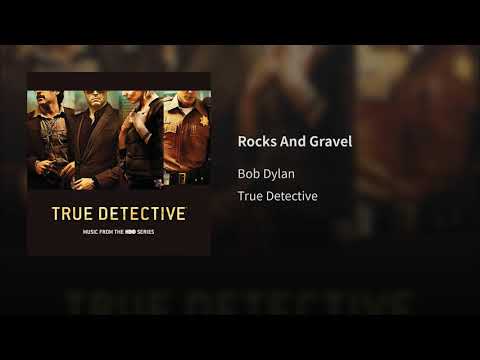
  • The song is played in the first episode of the first season of the HBO True Detective series, which starred Woody Harrelson and Matthew McConaughey as homicide detectives who get caught up in a bizarre occult crime network. The version on True Detective is the one that was almost used on The Freewheelin' Bob Dylan.
  • The basis of this song is "Solid Road," a traditional blues song collected by the ethno-musicologist Lomax brothers.

    Dylan carried two verses from this song over to his 1965 Highway 61 Revisited track "It Takes a Lot to Laugh, It Takes a Train to Cry."

    These lines from "Rocks And Gravel":
    Don't the clouds look lonesome shining across the sea
    Don't the clouds look lonesome shining across the sea
    Don't my gal look good
    When she's comin' after me?


    Became in "It Takes A Lot To Laugh, It Takes A Train To Cry":
    Don't the sun look good
    Goin' down over the sea?
    But don't my gal look fine
    When she's comin' after me?
    in

    These lyrics, however, were never really Dylan originals to begin with. He took them from "Alabama Woman Blues" by Leroy Carr. In that song, the lyrics are:

    Don't the clouds look lonesome across the deep blue sea
    Don't my gal look good when she's coming after me

Comments

Be the first to comment...

Editor's Picks

Jack Tempchin - "Peaceful Easy Feeling"

Jack Tempchin - "Peaceful Easy Feeling"They're Playing My Song

When a waitress wouldn't take him home, Jack wrote what would become one of the Eagles most enduring hits.

Annie Haslam of Renaissance

Annie Haslam of RenaissanceSongwriter Interviews

The 5-octave voice of the classical rock band Renaissance, Annie is big on creative expression. In this talk, she covers Roy Wood, the history of the band, and where all the money went in the '70s.

Bryan Adams

Bryan AdamsSongwriter Interviews

What's the deal with "Summer of '69"? Bryan explains what the song is really about, and shares more of his songwriting insights.

Francis Rossi of Status Quo

Francis Rossi of Status QuoSongwriter Interviews

Doubt led to drive for Francis, who still isn't sure why one of Status Quo's biggest hits is so beloved.

Billy Steinberg - "Like A Virgin"

Billy Steinberg - "Like A Virgin"They're Playing My Song

The first of Billy's five #1 hits was the song that propelled Madonna to stardom. You'd think that would get you a backstage pass, wouldn't you?

American Hits With Foreign Titles

American Hits With Foreign TitlesSong Writing

What are the biggest US hits with French, Spanish (not "Rico Suave"), Italian, Scottish, Greek, and Japanese titles?