We Take Care of Our Own

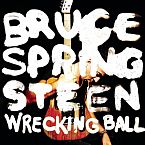
Album: Wrecking Ball (2012)
Play Video

Songfacts®:

  • Three years after the release of Working on a Dream, Springsteen swung back into action when this lead single from his seventeenth studio album, Wrecking Ball, was made available online. The anthemic up-tempo rocker finds The Boss singing of patriotism and brotherhood and decrying the broken promises of the government. "Wherever this flag's flown, we take care of our own," he croons. The song was released on January 19, 2012.
  • The rollicking keyboard line appears to fill the gap left by the absence of Clarence Clemmons' sax. The song was the first Springsteen composition to be heard since the death of his former E Street band colleague.
  • The line, "Where's the love that has not forsaken me," most likely alludes to Jesus Christ's cry on the cross, "My God, why hast thou forsaken me," as reported in the Gospel of Matthew.
  • This song along with the rest of Wrecking Ball was produced by Ron Aniello, who has also manned the boards for records by Jars of Clay, and Springsteen's wife and E Street Band member Patti Scialfa.
  • Much of the song's lyrical content appears to contradict its title. For instance Springsteen explicitly references America's lack of care for the Hurricane Katrina casualties. ("From the shotgun shack to the Super Dome/There ain't no help, the cavalry stayed home"). Springsteen clarified the song's message, during the unveiling of Wrecking Ball to the world's media at Sony Records' Paris headquarters. "The song asks the question that the rest of the record tries to answer which is, 'Do we?' - we often don't," he said.

    The Boss added that songs such as this and 'Born In The U.S.A.,' with an apparently positive chorus should not be misinterpreted. "I write carefully and precisely," he said, "and I believe clearly. If you're missing it you're not quite thinking hard enough."
  • Springsteen opened the Grammy Awards in 2012 with a performance of this song that met with mostly favorable reviews. The song fit the somber mood of the ceremony, which took place the night after Whitney Houston was found dead.
  • The song enjoyed a sales surge after it was played at the end of President Obama's speech during the Democratic National Convention on September 6, 2012.
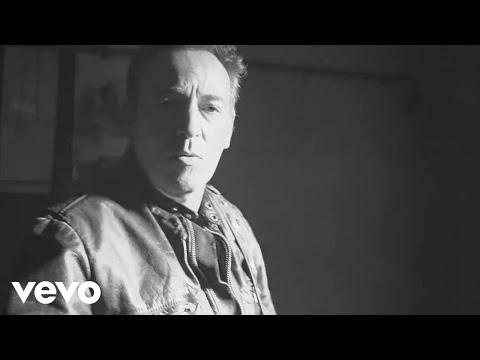
  • The song's music video was directed by Thom Zimmy and shot in early January 2012 in an abandoned theater in Asbury Park. Reflective close-ups and slow-motion images of working class Americans augment shots of Bruce performing. "You work with spontaneity," explained Zimmy to Uncut magazine. "The end of that video, for instance, where the people are walking, wasn't planned. The weekend we were shooting, the Light of Day charity concert event took place in town, so we gathered up some fans and people in the streets of Asbury Park and had that shot happen, then incorporated it into the video. With Bruce, you're planning, but you're always open to the moment."

Comments

Be the first to comment...

Editor's Picks

Angelo Moore of Fishbone

Angelo Moore of FishboneSongwriter Interviews

Fishbone has always enjoyed much more acclaim than popularity - Angelo might know why.

Alan Merrill of The Arrows

Alan Merrill of The ArrowsSongwriter Interviews

In her days with The Runaways, Joan Jett saw The Arrows perform "I Love Rock And Roll," which Alan Merrill co-wrote - that story and much more from this glam rock pioneer.

Rob Thomas of Matchbox Twenty

Rob Thomas of Matchbox TwentySongwriter Interviews

Rob Thomas on his Social Distance Sessions, co-starring with a camel, and his friendship with Carlos Santana.

Rufus Wainwright

Rufus WainwrightSongwriter Interviews

Rufus Wainwright on "Hallelujah," his album Unfollow The Rules, and getting into his "lyric trance" on 12-hour walks.

Classic Metal

Classic MetalFact or Fiction

Ozzy, Guns N' Roses, Judas Priest and even Michael Bolton show up in this Classic Metal quiz.

Ian Anderson: "The delight in making music is that you don't have a formula"

Ian Anderson: "The delight in making music is that you don't have a formula"Songwriter Interviews

Ian talks about his 3 or 4 blatant attempts to write a pop song, and also the ones he most connected with, including "Locomotive Breath."