
Dream of a Witches' Sabbath

Album: Fantastic Symphony (1830)
Play Video

Songfacts®:

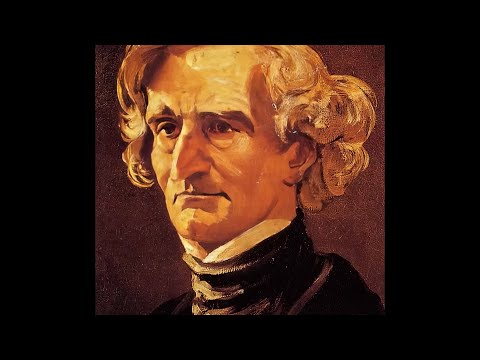
  • This is the fifth and final movement from French romantic composer Hector Berlioz's Symphonie fantastique, which is otherwise known as An Episode in the Life of an Artist. Its five sections trace the hero of the work as he falls in love. The symphony was the work that made Berlioz famous.
  • After attending a performance of Shakespeare's Hamlet on September 11, 1827, Berlioz fell in love with a pretty Irish actress, Harriet Smithson, who played Ophelia. At the time he was a little known composer but he pursued Harriet with numerous love letters, all of which went unanswered. When she left Paris they had still not met but despite this, Berlioz wrote this symphony in 1830 as a way to express his unrequited passion. In December 1832 he gave a concert of Symphonie fantastique to which he invited Harriet to attend, which she did and heard the work that she'd inspired for the first time. By now the actress' career was failing and she was in financial hardship; Harriet saw the besotted Hector as a way out of debt so on October 3, 1833, they were married. They had one child together, Louis Berlioz, who was born on August 14, 1834. While the marriage was happy for several years, they separated nine years later.
  • Symphonie fantastique is a work of exceptional power and originality. The work tells the story of a young musician with a lively imagination, who in the depths of lovesick despair attempts suicide with opium, but takes only enough laudanum to induce hallucinations. His Beloved appears as a recurring melody with several personalities. History suggests Berlioz composed at least a portion of the drug-crazed symphony under the influence of opium and the work was described by Leonard Bernstein as the first musical expedition into psychedelia because of its hallucinatory and dream-like nature.
  • The first performance of this piece took place at the Paris Conservatoire in December 1830 conducted by Berlioz. He revised it in 1832 and added two cornets to the instrumentation in 1845.
  • The symphony was notable for being the first time a composer wrote for suspended cymbal. Berlioz was also the first composer to specify what type of timpani mallets to use for this work.
  • The "Symphonie fantastique" features the cor anglais musical instrument, which is an alto oboe, pitched a fifth lower (in F) than the oboe. Other orchestral works that feature the cor anglais has many famous solos in the orchestral repertoire, including Gioachino Rossini's "William Tell Overture" (1829) and Dvorák's "New World" symphony (1893).
  • The final movement is the best known part of the symphony, thanks to its use in the Julia Roberts movie, Sleeping With The Enemy. It features a four-part structure, which Berlioz described in his own program notes from 1845 as follows:

    "He sees himself at a witches' Sabbath, in the midst of a hideous gathering of shades, sorcerers and monsters of every kind who have come together for his funeral. Strange sounds, groans, outbursts of laughter; distant shouts which seem to be answered by more shouts. The beloved melody appears once more, but has now lost its noble and shy character; it is now no more than a vulgar dance tune, trivial and grotesque: it is she who is coming to the Sabbath… Roar of delight at her arrival… She joins the diabolical orgy… The funeral knell tolls, burlesque parody of the Dies irae, the dance of the witches. The dance of the witches combined with the Dies irae."

Comments: 1

  • Oldpink from Farmland, InThe Dies Irae section of this is something that will really raise your hackles.
    It was used to great effect, greatly slowed down and extended, with eerie screaming sound effects, for the opening music for "The Shining."
    Arguably the scariest piece of music ever devised.
see more comments

Editor's Picks

Jesus Thinks You're a Jerk: Rock vs. Televangelists

Jesus Thinks You're a Jerk: Rock vs. TelevangelistsSong Writing

When televangelists like Jimmy Swaggart took on rockers like Ozzy Osbourne and Metallica, the rockers retaliated. Bono could even be seen mocking the preachers.

Jonathan Cain of Journey

Jonathan Cain of JourneySongwriter Interviews

Cain talks about the divine inspirations for "Don't Stop Believin'" and "Faithfully."

Gentle Giant

Gentle GiantSongwriter Interviews

An interview with Ray and Derek Shulman of the progressive rock band Gentle Giant to discuss counterpoint, polyrhythms, and... Bon Jovi.

Deconstructing Doors Songs With The Author Of The Doors Examined

Deconstructing Doors Songs With The Author Of The Doors ExaminedSong Writing

Doors expert Jim Cherry, author of The Doors Examined, talks about some of their defining songs and exposes some Jim Morrison myths.

Album Cover Inspirations

Album Cover InspirationsSong Writing

Some album art was at least "inspired" by others. A look at some very similar covers.

Artis the Spoonman

Artis the SpoonmanSong Writing

Even before Soundgarden wrote a song about him, Artis was the most famous spoon player of all time. So why has he always been broke?