Farewell, Angelina

Album: Farewell, Angelina (1965)
Play Video

Songfacts®:

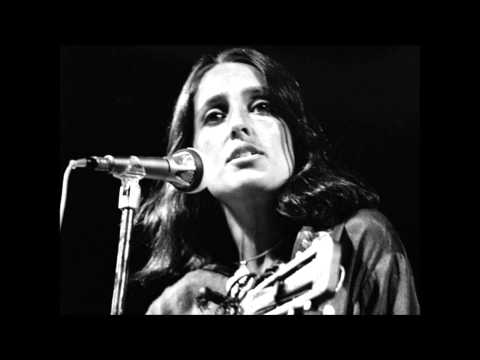
  • "Farewell, Angelina" was an outtake from recording sessions for Bringin' It all Back Home, Bob Dylan's fifth studio album. No one is sure why the song was left off the album, but Dylan gave it to Joan Baez, who made it the title track to her album released in October 1965. Baez included three other songs written by Dylan on the set.

    Dylan's version was thought to have been lost, or maybe to have never existed at all, until its release on The Bootleg Series in 1991.
  • This song is an important landmark in Dylan's evolution as a songwriter.

    As Michael Grey writes The Bob Dylan Encyclopedia, "'Farewell Angelina' seems to introduce surrealistic language with a bang, in a new way for Dylan, whereas by the time of Blonde on Blonde he had adjusted that language almost out of recognition. In this sense 'Farewell Angelina' stands alone."

    One of Dylan's trademarks is embedding surrealist lines and strange images into otherwise mundane stories. With "Farewell, Angelina" there is no mundanity. The song is pure surrealism from start to finish.

    It starts with "bells of the crown" being stolen by bandits, and a tingling triangle. The second verse's "table standing empty by the edge of the sea" could be the title of a painting by the great surrealist artist Salvador Dali. And as Grey notes (also in the Bob Dylan Encyclopedia), it's the image that "encapsulates the song."
  • The song is composed of six verses, each with nine lines.

    In the seventh line of each verse, Dylan sings, "Farewell, Angelina," with a monotone, vaguely lilting resignation, subtly transmitting a great depth of emotional resignation with his understated vocals. The penultimate line in each verse describes the sky. First it's on fire, then trembling, folding, changing color, being embarrassed, and finally erupting.

    The final line in each verse is Dylan telling this unidentified Angelina that he must go, must leave, must go where it's quiet - each verse ends with a slightly different sentiment of departure. The song discusses the coming of an apocalyptic event, and insists that we must go.

    Given the apocalyptic feel of the song, and Dylan's penchant for referencing the Bible, the first-verse line "the trumpets play slow" may refer to the Revelation 8:7:

    The first angel blew his trumpet, and there was hail and fire mixed with blood, and it was thrown at the earth so that a third of the earth was burned up, a third of the trees were burned up, and all the green grass was burned up
  • King Kong, little elves
    On the rooftops they dance Valentino-type tangos
    While the makeup man's hands
    Shut the eyes of the dead Not to embarrass anyone


    This, the second-to-last verse in the song, is maybe the strangest. The references to King Kong (Dylan was eight years old when the first King Kong film was released) and the elves seem silly, but the verse is actually kind of dark.

    "Valentino-type tangos" almost certainly refers to the "Latin Lover," Rudolph Valentino, a major silent film star of the 1920s, a cultural icon, and a sex symbol. He died of pleurisy at 31 years old, shocking his fans. So, in Dylan's lyrics, the "makeup man" may be a mortuary makeup artist. Even if it's a movie makeup artist, though, the line "shut the eyes of the dead" must hark back to Valentino in some way.

    So, the seemingly cutesy verse hides some darker stuff.
  • Dylan recorded the song under a working title of "Alcatraz to the 5th Power" on January 13, 1965, during the very first Bringin' it all Back Home recording session.
  • Tom Wilson produced the song. Roy Halee and Fred Catero had sound engineering duties.
  • According to Bob Dylan: All the Songs, an 1850s Scottish sailors' song by George Scroggie titled "Farewell to Tarwathie " provided the skeleton of the song's melody. That song, in turn, had been inspired by the old traditional tune, "The Wagoner's Lad."
  • In 1981, Dylan recorded a song with similar themes called "Angelina." That one also remained unreleased until 1991, when it surfaced on The Bootleg Series.

Comments: 3

  • Laurel from Sedona AzThis is one of my favorite Dylan songs. To me it evokes the Vietnam War and all its horrors: the gypsies (soldiers as disposable playing cards) filing by the guards (the draft board), the cross-eyed pirate shooting tin cans (My Lai?) while the neighbors (the American people) cheer, the makeup man shutting the eyes of the dead American soldiers so the politicians aren’t embarrassed, and finally, “the machine guns are roaring while the puppets heave rocks, while fiends nail time bombs to the hands of the clocks” is pretty descriptive of war. And each verse ending line describes how or where or why the narrator “must go”. And the last lines are the most evocative of that time: Call me any name you like, I will never deny it…I must go where it’s quiet.” He is fleeing to Canada rather than go and likely die in a politically motivated, useless war, which is grinding up young American men like hamburger for no good reason, and he is willing to be called a draft-dodger, a traitor, and any other derogatory names used for those who wouldn’t go to be sacrificed in the Cold War.
  • MelanieFarewell, Angelina is the most hauntingly, beautiful, surrealistic song I think Dylan ever wrote and I love how Paul Anka does this song
  • Zale from Cambria Ca.Farewell Angelina seems to fit the moment of the Pandemic perfectly and it is a dark picture indeed Joan Baezs voice is the only soothing thing about this Dali painting. Dylan / Dali ..... they certainly had similar ways of expressing their thoughts.
see more comments

Editor's Picks

Art Alexakis of Everclear

Art Alexakis of EverclearSongwriter Interviews

The lead singer of Everclear, Art is also their primary songwriter.

La La Brooks of The Crystals

La La Brooks of The CrystalsSong Writing

The lead singer on "Da Doo Ron Ron" and "Then He Kissed Me," La La explains how and why Phil Spector replaced The Crystals with Darlene Love on "He's A Rebel."

Trans Soul Rebels: Songs About Transgenderism

Trans Soul Rebels: Songs About TransgenderismSong Writing

A history of songs dealing with transgender issues, featuring Pink Floyd, David Bowie, Morrissey and Green Day.

Lajon Witherspoon of Sevendust

Lajon Witherspoon of SevendustSongwriter Interviews

The Sevendust frontman talks about the group's songwriting process, and how trips to the Murder Bar helped forge their latest album.

Jon Anderson of Yes

Jon Anderson of YesSongwriter Interviews

From the lake in "Roundabout" to Sister Bluebird in "Starship Trooper," Jon Anderson talks about how nature and spirituality play into his lyrics for Yes.

Angelo Moore of Fishbone

Angelo Moore of FishboneSongwriter Interviews

Fishbone has always enjoyed much more acclaim than popularity - Angelo might know why.