He Was My Brother

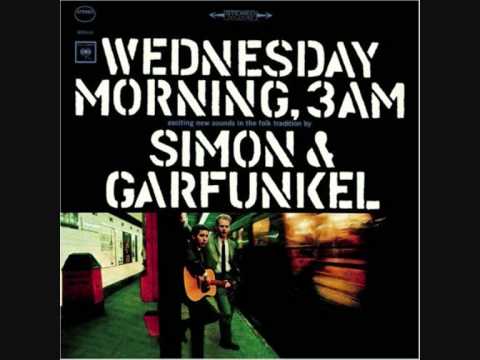
Album: Wednesday Morning, 3 AM (1964)
Play Video

Songfacts®:

  • Paul Simon wrote "He Was My Brother" in the early 1960s in support of the burgeoning civil rights movement in America. He wrote it from the perspective of a man whose brother, a Freedom Rider, is killed in a hate crime by an angry mob. The Freedom Rides were a series bus rides with a mix of black and white passengers that traveled into states in the deep South where races were not allowed to mix on busses (a federal law said they could, but some states ignored it). This didn't go over well in Alabama, where a bus was firebombed. No Freedom Riders were killed, but they easily could have been.
  • Paul Simon released "He Was My Brother" in 1963 under the name Paul Kane, one of his fleeting pseudonyms. He and Art Garfunkel were on separate paths at this point, having split after recording at Tom & Jerry in the late '50s. They got back together later in 1963 and released their first album, Wednesday Morning, 3 AM, which includes "He Was My Brother." It looked like the album would tank, so the duo broke up once again. But then in 1965 another track on the album, "The Sound of Silence," became a surprise hit, so they returned to action, becoming one of the most vital acts of the decade.
  • The song hit home for Paul Simon when his friend Andrew Goodman, his classmate at Queens College in New York City, was killed by the Ku Klux Klan on June 21, 1964. Goodman was traveling with James Chaney, a 21-year-old African American from Mississippi, and Michael Schwerner, a 24-year-old white man from New York, in Mississippi as part of the Freedom Summer campaign to help register African Americans to vote. They were pulled over for a supposed traffic violation and brought to jail. When they were released, members of the Klan followed them and killed them, burying the bodies, which weren't found until 44 days later.

    Simon wrote the song before the murders but the Simon & Garfunkel version was released after.

Comments: 10

  • Wendy Lynne Efird from Little Rock, ArkansasHe Was My Brother was written in 1963, and the Mississippi Three were not killed until 1964. Simon dedicated the song to them after the fact. For whom was it originally written.
  • Miriam from Newyork City"Freedom writer" should be "Freedom Rider." No matter whether the song was written to honor Andrew Goodman, it was written to honor the Civil Rights Movement in which the Freedom Riders played a part, as did Goodman, Schwerner and Chaney.
  • Paul AbleWhere was Paul hiding when they were marching ?
  • Fred from Laurel, MdRe-thinking my remarks, replacing "this town" with "Mississippi" in the lyrics had to have happened AFTER the Jun 21 murders, i.e., after BOTH tracks were recorded. Pascal's S&G songbook probably reflects a change made by the duo in their live performances of the song after the murders in Miss., which is reflected in the YouTube vid on this page. The alt. track probably DOESN'T have the "Mississippi" wording. 2009 Jun 06, later.
  • Fred from Laurel, MdAgain, the song was NOT originally written as a tribute or memorial to the 3 Freedom Riders murdered in Mississippi, because it was written BEFORE that incident. Nor was this any sort of premonition on Paul's part, because when he was writing the song, there had already been plenty of violence directed at Freedom Riders, and it was no stretch to see such an incident turning into a killing, many of which had already occurred before the Freedom Riders were formed. *** The object of the rededication of this song, after the Mississippi incident, was indeed Goodman, not Schwerner, according to http://en.wikipedia.org/wiki/Simon_&_Garfunkel : --- "Simon showed Garfunkel a few songs that he had written in the folk style: 'Sparrow', 'Bleecker Street', and 'He Was My Brother', which was later dedicated to Andrew Goodman, a friend of both Simon and Garfunkel, and a classmate of Simon's at Queens College, who was one of three civil rights workers murdered in Neshoba County, Mississippi, on June 21, 1964." --- But in a larger sense, I do think the song was rededicated to all three. *** Pascal/Dijon, FR -- What is the publication date on that songbook? Because on the LP, "Wednesday Morning 3 a.m.," released 1964 Oct 19, on which this song appears, they definitely sing, "This town's gonna be your buryin' place." However, I see in the wiki article about S&G's discography, that there was a re-release of the album in 2001 that included an alternate take of this song, recorded the same date as the original track--1964 Mar 17. I haven't heard this track, and it might indeed have the wording you find in your songbook. This also makes clear that the recording of the song occurred before the Miss. murders, so that the rededication of the song had to be AFTER it was recorded. Interesting. 2009 Jun 06
  • Ben from Brisbane, AustraliaLance,
    I don't know the song, but I just read the lyrics and it looks pretty clear that the song is about those killed in Mississippi. Do you mean that he came up with the idea for the song and then rethought and rewrote it after the killings? Not criticising, just curious.
  • Harold from Germantown, TnThis was written not in memory of Andrew Goodman, but instead as a memorial to Michael "Mickey" Schwerner. As a college student, Schwerner had been a member of Alpha Epsilon Pi fraternity. Both Simon and Garfunkel were also members of AEPi. Of course, in the larger sense, the song is a tribute to the memories of all three of the slain civil rights workers.
  • Fred from Laurel, MdDefinitely 'Freedom Rider'
    * * *
    The murder of Andrew Goodman, Mickey Schwerner and James Chaney the night of June 21, 1964 was the subject of the made-for-TV movie, "Murder in Mississippi" and the feature film, "Mississippi Burning." See http://en.wikipedia.org/wiki/Andrew_Goodman and http://en.wikipedia.org/wiki/Simon_&_Garfunkel
    * * *
    This song was indeed written before that incident, but was dedicated to Goodman's memory after it.
  • Pascal from Dijon, France'freedom writer': are you sure it's not rather 'freedom rider'?
    paul simon changed some words compared to the original version that is on the paul simon songbook: 'this town's gonna be...' was originally 'mississippi's gonna be your buryin' place'
  • Lance from Spring Hill, FlThis song was NOT written in memory of Andrew Goodman. It was actually written before the incident when Paul Simon was in England. It was after Andrew was sadly killed that Paul Simon released the song.
see more comments

Editor's Picks

Jack Tempchin - "Peaceful Easy Feeling"

Jack Tempchin - "Peaceful Easy Feeling"They're Playing My Song

When a waitress wouldn't take him home, Jack wrote what would become one of the Eagles most enduring hits.

Annie Haslam of Renaissance

Annie Haslam of RenaissanceSongwriter Interviews

The 5-octave voice of the classical rock band Renaissance, Annie is big on creative expression. In this talk, she covers Roy Wood, the history of the band, and where all the money went in the '70s.

Bryan Adams

Bryan AdamsSongwriter Interviews

What's the deal with "Summer of '69"? Bryan explains what the song is really about, and shares more of his songwriting insights.

Francis Rossi of Status Quo

Francis Rossi of Status QuoSongwriter Interviews

Doubt led to drive for Francis, who still isn't sure why one of Status Quo's biggest hits is so beloved.

Billy Steinberg - "Like A Virgin"

Billy Steinberg - "Like A Virgin"They're Playing My Song

The first of Billy's five #1 hits was the song that propelled Madonna to stardom. You'd think that would get you a backstage pass, wouldn't you?

American Hits With Foreign Titles

American Hits With Foreign TitlesSong Writing

What are the biggest US hits with French, Spanish (not "Rico Suave"), Italian, Scottish, Greek, and Japanese titles?