Spanish Bombs

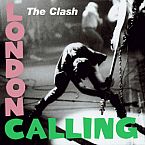
Album: London Calling (1979)
Play Video

Songfacts®:

  • The song was inspired by a conversation singer Joe Strummer was having with his then-girlfriend Gaby Salter on the way home from the studio one night about the Basque separatists who at the time were engaged in a bombing campaign against various holiday resorts on the Costa Del Sol. "There should be a song called 'Spanish Bombs' about it," noted Strummer. So he wrote one. Interestingly, this is very similar to how "London Calling" first came about.

    This song deals with that uprising and parallels it with the Spanish Civil War, which devastated Spain from 1936-1939 and resulted in a dictatorship led by the Nationalist General Francisco Franco. Clash roadie Johnny Green was fascinated with that era of history and loaned Strummer numerous books on the subject, including George Orwell's Homage To Catalonia. Some of the references in the song:

    Andalucia was one of the first regions of Spain to be overtaken by the fascists in 1936 ("Spanish songs in Andalucia").

    Federico Lorca was a Republican poet from Andalucia who was killed during the rebellion ("Fredrico Lorca is dead and gone").

    The Guardia Civil (or "Civil Guard") is a military police force under the control of both the Ministry of Interior and the Ministry of Defense of Spain ("The black cars of the Guardia Civil").

    More contemporary references include DC-10 passenger aircraft ("I'm flying in a DC 10 tonight"), and disco casinos and hotels ("Spanish weeks in my disco casino, the freedom fighters died upon the hill") which help to tie the dual themes together. Evidence that Strummer is drawing parallels with past and present is demonstrated in the lines "The hillsides ring with 'Free the people,' Or can I hear the echo from the days of '39?"
  • The Mexican band Tijuana No has covered this song. >>
    Suggestion credit:
    Bertrand - Paris, France, for above 2
  • Regarding the lyrics: "They sang 'the red flag', they wore the black one," "The Red Flag" is a famous socialist anthem. "the black (flag)" refers to the chosen color of the anarchist movement. The lines "Back home the buses went up in flashes / The Irish tomb was drenched in blood" probably refer to the conflict with the IRA.
  • Joe Strummer wrote this when he barely knew any Spanish. In the liner notes to the album the lyrics are merely Spanish sounding gibberish: "Spanish bombs; yo t'quierro y nfinito. / Yot'quierro, o mi corazón." which don't make any sense at all. >>
    Suggestion credit:
    Martin - Rostock, Germany, for above 2
  • Joe Strummer had some prior knowledge of the contemporary situation in Spain at the time, as his ex-girlfriend Paloma Romano's family were from Andalucia.
  • Guitarist Mick Jones was at the time broadening his influences on his guitar playing, and like in the similar song from London Calling "Jimmy Jazz," the influence of the Jazz/Blues guitarist Django Reinhardt is evident here.
  • First debuted in Atlanta in October 1979, this featured off and on in The Clash's live canon for the rest of their career but never regularly. When the band toured Spain in 1981 the song predictably went down a storm.

Comments: 7

  • Chris from Santa CruzThe pronunciation of the Spanish lyrics is terrible, but the grammar and meaning are correct and clear. The means is "I love you deeply, I love you, oh my dear.!" It should be written "Yo te quiero infinito, yo te quiero, o mi corazón." Although corazón literally means the heart, here it is a term of endearment like "dear heart."
  • Eric from HarrisburgMelodee Fernandez sang a Spanish version of the song. At times it is almost spoken word. You can find it online.
  • Javier from MadridThe literal traduction from "yo te quiero infinito. Yo te quiero, oh mi corazón" actually is "I infinitely love you. I love you, oh my heart". I'm Spanish so trust me.
  • Natalie from CaliforniaThe Spanish sounding gibberish is incorrect spelling in Spanish. He spelled them as yo t'quierro y nfinito. Yo t'quierro, o mi corazon. The correct spelling is yo te quiero infinito. Yo te acuerda, o mi corazon. The lyrics mean I love you to infinity. I remember you. Oh my heart.
  • Isabel from Ny... the Spanish sounding "gibberish" as you say is actual Spanish and it translates to - I will love you forever. I will love you. Oh my heart.
  • Felix from Guildford, United KingdomWhile the Spanish lyrics are inaccurate, 'yo te quiero' means 'I want you,' and 'O mi corrazón' means 'O my heart'.
  • Ben from Gosford, AustraliaFirst time I heard this song was in 1990. I was only 5 at the time, but I loved it, even though I had no idea what the song was about.
see more comments

Editor's Picks

Does Jimmy Page Worship The Devil? A Look at Satanism in Rock

Does Jimmy Page Worship The Devil? A Look at Satanism in RockSong Writing

We ring the Hell's Bells to see what songs and rockers are sincere in their Satanism, and how much of it is an act.

Bryan Adams

Bryan AdamsSongwriter Interviews

What's the deal with "Summer of '69"? Bryan explains what the song is really about, and shares more of his songwriting insights.

Rush: Album by Album - A Conversation With Martin Popoff

Rush: Album by Album - A Conversation With Martin PopoffSong Writing

A talk with Martin Popoff about his latest book on Rush and how he assessed the thousands of albums he reviewed.

Spooner Oldham

Spooner OldhamSongwriter Interviews

His keyboard work helped define the Muscle Shoals sound and make him an integral part of many Neil Young recordings. Spooner is also an accomplished songwriter, whose hits include "I'm Your Puppet" and "Cry Like A Baby."

Gary Brooker of Procol Harum

Gary Brooker of Procol HarumSongwriter Interviews

The lead singer and pianist for Procol Harum, Gary talks about finding the musical ideas to match the words.

Who's Johnny, And Why Does He Show Up In So Many Songs

Who's Johnny, And Why Does He Show Up In So Many SongsSong Writing

For songwriters, Johnny represents the American man. He has been angry, cool, magic, a rebel and, of course, marching home.