
Flight 505

Album: Aftermath (1966)
Play Video

Songfacts®:

  • In this early Rolling Stones song, Mick Jagger gets a bad case of wanderlust and buys a ticket on Flight 505. He doesn't know where he's going, and doesn't really care - he just needs to get away.
  • At the end of this song, it sounds like the plane doesn't reach its destination, possibly going down in a crash.

    The common misinterpretation of this song is that Flight 505 was the plane crash that killed Buddy Holly, Ritchie Valens, and The Big Bopper in 1959, but this is not true. It is not officially confirmed by a news source that the plane crash of "The Day the Music Died" was actually flight #505. In any case, the lyrics to this Rolling Stones song have the line "He put the plane down in the sea," which of course, couldn't mean the Holly/Valens/Bopper crash that happened on dry land in Mason City, Iowa in 1959:

    Here is a fact page on the crash site, dry land, no sea.

    Here is the full text of the Civil Aeronautics Board Aircraft Accident Report on the plane crash that killed Buddy Holly, Ritchie Valens and the Big Bopper, loaded with minute details down to tachometer readings and altimeter settings, and there's no flight number mentioned there either.

    In any case, a flight heading from Mason City, Iowa, to Moorhead, Minnesota would have been a northbound flight, and northbound flights are traditionally assigned even numbers.

    Finally, this was a private chartered flight, not a commercial flight. So it's unlikely that an official flight number would have been assigned. Sometimes small aircraft use their plane's serial ID for the flight number; in this case, the plane's ID ("tail number") was "N3794N."

    So it looks like the "flight 505 = Buddy Holly's crash" thing is an urban legend. But a quick "buddy holly flight 505" search will show that this is a widely circulated rumor on the web.
  • Flight 505 was also coincidentally the flight number of the BOAC (British Airways) plane the Stones took on their first trip to the US in 1964 (according to Bill Wyman, Stone Alone). >>>
    Suggestion credit:
    Louie - Middletown, NY
  • That's Ian Stewart on piano. Stewart, one of the founding members of the Stones, later left the group's lineup but stayed on as road manager until his demise from heart attack in 1985. Keith Richards would later say in his autobiography Life that he still considered The Rolling Stones to be Ian Stewart's band.
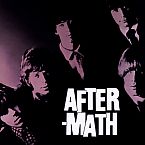
  • The cover art for "Flight 505"'s album Aftermath has the Stones dressed and posed in suspiciously Beatles-like style; compare the cover work for Beatles For Sale and With The Beatles, and you'll see the importance of packaging when marketing a British group in the States. Aftermath was also the first Stones album recorded entirely in the US.

Comments: 5

  • Robin from NycI love the artistry of the song's surprise ending. Flight 505 was BOAC's daily NY/London route. I took it several times. It would make sense Jagger had too.
  • Jan-erik Johansson from Norrköping Sweden I figured the band recycled the fragment intro i the coming single 'Have you seen your mother...' from sept '66. Ian Stewart piano riff?
  • Bb from Los Banos, CaWhile this song was being recorded, BOAC flight 911 crashed into MT. Fuji on March 4, 1966.
  • Sam from Shanghai, ChinaThe piano bit is nearly the riff to Satisfaction
  • Chelsea from Nyc, OrThe intro has Ian Stewart playing piano. Bill Wyman on Fuzzbass, an effect he used a lot on "Aftermath".
see more comments

Editor's Picks

Gary Brooker of Procol Harum

Gary Brooker of Procol HarumSongwriter Interviews

The lead singer and pianist for Procol Harum, Gary talks about finding the musical ideas to match the words.

Don Felder

Don FelderSongwriter Interviews

Don breaks down "Hotel California" and other songs he wrote as a member of the Eagles. Now we know where the "warm smell of colitas" came from.

Allen Toussaint - "Southern Nights"

Allen Toussaint - "Southern Nights"They're Playing My Song

A song he wrote and recorded from "sheer spiritual inspiration," Allen's didn't think "Southern Nights" had hit potential until Glen Campbell took it to #1 two years later.

Donnie Iris (Ah! Leah!, The Rapper)

Donnie Iris (Ah! Leah!, The Rapper)Songwriter Interviews

Before "Rap" was a form of music, it was something guys did to pick up girls in nightclubs. Donnie talks about "The Rapper" and reveals the identity of Leah.

Al Kooper

Al KooperSongwriter Interviews

Kooper produced Lynyrd Skynyrd, played with Dylan and the Stones, and formed BS&T.
Emilio Castillo from Tower of Power

Emilio Castillo from Tower of PowerSongwriter Interviews

Emilio talks about what it's like to write and perform with the Tower of Power horns, and why every struggling band should have a friend like Huey Lewis.