
Bodhisattva Vow

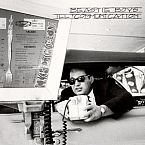
Album: Ill Communication (1994)
Play Video

Songfacts®:

  • "Bodhisattva Vow" is one of the Beastie Boys' most unique songs, if not one of the most unique songs ever recorded in hip-hop. As Mix described it in 1994, "The hypnotic soul of 'Bodhisattva Vow' mixes chanting Buddhist Monks with an echo-drenched Beastie vocal."
  • The song was driven primarily by Beastie Boy Adam Yauch (MCA). As a practicing Buddhist, he had taken the Bodhisattva vow, which is a promise to liberate all sentient beings from suffering by practicing the six perfections of giving, moral discipline, patience, effort, concentration, and wisdom. Yauch began his serious study of Buddhism after attending a Dalai Lama lecture in spring 1993, in the midst of recording the Check Your Head album.

    "The general concept behind the song," Yauch said, "was to take the meaning of Shantideva's text, at least on the level that I understood it, and compress it into a modernized, three-verse rhyming song."

    While not expressing regret for the original purpose, Yauch did add that the notion that someone who went to a single teaching and read a couple books could then "write an updated abridged version of the Bodhicaryavatara is presumptuous at best."

    The lyrics in "Bodhisattva Vow" discuss the vow in straightforward terms and without ambiguity (once one knows the terms used).
  • One of the key pieces of the Bodhisattva vow is the veneration for all current and past Buddhas. This is mirrored in the opening lyric:

    I develop the awakening mind
    I praise the Buddhas as they shine


    The vow holds not only for the life it's taken in, but also for all future lives. This is the meaning behind the lyric, "For the rest of my lifetimes and even beyond."

    The Shantideva mentioned in the song was an 8th-century Buddhist that wrote some influential and important Buddhist texts, including the Bodhicaryavatara mentioned in Yauch's quote above.
  • In Buddhist tradition, the Dharma mentioned in the song is another word for the Buddha's teachings of cosmic law and order (it has different meanings in Hinduism, Jainism, and Sikhism). The Samsara mentioned in the song references a Buddhist concept sometimes called the "wheel of existence." It's the karmic cycle of endless rebirth and redeath, in which most human beings are trapped. An enlightened being transcends this cycle, and that is what the lyrics are referring to with, "And the Enlightened Ones who've graduated Samsara."
  • Every line in the song similarly addresses Buddhist spirituality and aspects of the Bodhisattva vow, discussing forgiveness ("If others disrespect me or give me flak,
    I'll stop and think before I react"), selflessness ("seeing others as important as myself"), and meditation ("I strive for a happiness of mental wealth").

    The song was produced by the Beastie Boys and Mario Caldato. It was recorded and mixed at G-Son Studios in Atwater Village, California, and Tin Pan Alley, New York.
  • All proceeds from the song go to the Aboriginal Children's Service, Tibet House, and the Office of Tibet.

Comments

Be the first to comment...

Editor's Picks

Facebook, Bromance and Email - The First Songs To Use New Words

Facebook, Bromance and Email - The First Songs To Use New WordsSong Writing

Where words like "email," "thirsty," "Twitter" and "gangsta" first showed up in songs, and which songs popularized them.

Stand By Me: The Perfect Song-Movie Combination

Stand By Me: The Perfect Song-Movie CombinationSong Writing

In 1986, a Stephen King novella was made into a movie, with a classic song serving as title, soundtrack and tone.

Adele

AdeleFact or Fiction

Despite her reticent personality, Adele's life and music are filled with intrigue. See if you can spot the true tales.

Ian Anderson: "The delight in making music is that you don't have a formula"

Ian Anderson: "The delight in making music is that you don't have a formula"Songwriter Interviews

Ian talks about his 3 or 4 blatant attempts to write a pop song, and also the ones he most connected with, including "Locomotive Breath."

John Lee Hooker

John Lee HookerSongwriter Interviews

Into the vaults for Bruce Pollock's 1984 conversation with the esteemed bluesman. Hooker talks about transforming a Tony Bennett classic and why you don't have to be sad and lonely to write the blues.

Al Jourgensen of Ministry

Al Jourgensen of MinistrySongwriter Interviews

In the name of song explanation, Al talks about scoring heroin for William Burroughs, and that's not even the most shocking story in this one.