Losing You

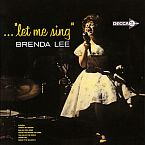
Album: Let Me Sing (1963)
Charted: 10 6
Play Video

Songfacts®:

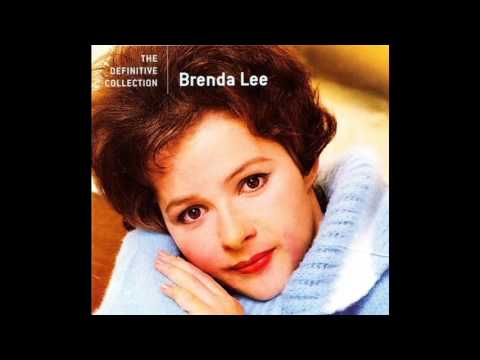
  • This is an adaptation of the French song "Connais-tu" written by Jean Renard and Pierre Havet. Carl Sigman penned the English version, which was originally recorded by Brenda Lee for her 1963 album Let Me Sing.
  • Artists that have covered the tune include Doris Day for her 1963 album Love Him and Al Martino as part of a 1964 EP.
  • This was one of two Brenda Lee songs that Alison Krauss covered for her 2017 collection, Windy City - she also recorded "All Alone Am I."

    "I always think that people are attached to the music of their parents' youth," Krauss explained. "You see a lot of people who kinda go back to that period and they have a romance about it. There's just something past our own memory that makes us connect."
  • Lee's mother wouldn't allow her to date, so the teenage singer had to use her imagination when it came to expressing the romantic anguish in songs like this one.

    "I was only a kid," she wrote in her 2002 autobiography, Little Miss Dynamite: The Life And Times Of Brenda Lee. "I'd certainly never been through anything like those emotions. I would just project myself and my feelings into the situation in the lyrics. I can only say it was a gift."

    In fact, she married her first and only boyfriend, Ronnie Shacklett, while "Losing You" was climbing the charts.
  • As with most of Lee's discography, this was produced by Owen Bradley, who started out as a songwriter and music arranger at Decca and worked his way up to become the vice president of the label's Nashville division in 1958. At the time, he and some of his contemporaries were pioneering production techniques that became known as the Nashville Sound, eschewing the rough elements of honky tonk for the smooth tempos, sophisticated strings, and crooning vocals of pop music.

    Lee could always count on Bradley to come up with a creative twist. "On 'Losing You,' he devised this gorgeous trumpet obbligato that soars in the introduction and throughout the song," she recalled in Little Miss Dynamite.
  • This features backing vocals from Millie Kirkham. Known as "The Nashville Soprano," Kirkham sang on many hits of the '50s and '60s, including Lee's "I'm Sorry" and Roy Orbison's "(Oh) Pretty Woman." She enjoyed a long association with Elvis Presley, singing on "Blue Christmas" and "Suspicious Minds," among others, and Sonny James with tunes like "Running Bear" and "Take Good Care Of Her."

    Lee praised her contribution on "Losing You": "Millie Kirkham's voice is sky-high, with this angelic sighing above my reading of the lyric."
  • This was Lee's last Top 20 hit on the R&B chart, where it peaked at #13.
  • The album's cover art captures Lee singing at the Copacabana while she sits atop a piano. Lee had just made her debut at the famed New York nightclub, where she earned a standing ovation and rave reviews from critics.

Comments: 1

  • Larry from New Brunswick, CanadaThis song was known as "Je te perds" recorded at the same time by Michel Louvain.
see more comments

Editor's Picks

John Doe of X

John Doe of XSongwriter Interviews

With his X-wife Exene, John fronts the band X and writes their songs.

Francis Rossi of Status Quo

Francis Rossi of Status QuoSongwriter Interviews

Doubt led to drive for Francis, who still isn't sure why one of Status Quo's biggest hits is so beloved.

David Paich of Toto

David Paich of TotoSongwriter Interviews

Toto's keyboard player explains the true meaning of "Africa" and talks about working on the Thriller album.

Francesca Battistelli

Francesca BattistelliSongwriter Interviews

The 2011 Artist of the Year at the Dove Awards isn't your typical gospel diva, and she thinks that's a good thing.

Tom Johnston from The Doobie Brothers

Tom Johnston from The Doobie BrothersSongwriter Interviews

The Doobies guitarist and lead singer, Tom wrote the classics "Listen To The Music," "Long Train Runnin'" and "China Grove."

Song Titles That Inspired Movies

Song Titles That Inspired MoviesSong Writing

Famous songs that lent their titles - and in some cases storylines - to movies.