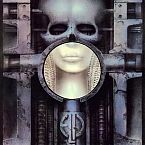
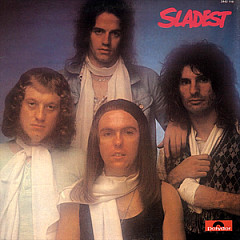
Album: Brain Salad Surgery (1973)
Play Video

Songfacts®:

  • This song is an adaptation of a 1961 classical piece called "Toccata Concertata" by the Argentine composer Alberto Ginastera (1916 - 1983). It was arranged by Emerson, Lake & Palmer by their keyboard player, Keith Emerson, who had a keen interest in classical music.
  • Emerson first heard "Toccata Concertata" in 1969 when he was playing a concert with his band The Nice in a bill with the Los Angeles Philharmonic, which performed the piece. He worked up a new arrangement, and after Emerson, Lake & Palmer formed, they decided to record it. The song ended up being a lynchpin of their fourth album, Brain Salad Surgery, and a live favorite.
  • Getting permission to use "Toccata Concertata" was a challenge. Keith Emerson tried doing it through the song's publishers, but that didn't fly, so he arranged to meet Alberto Ginastera at his home in Switzerland. According to Emerson, when he played the ELP version for Ginastera, the composer was delighted and enthusiastically granted permission.
  • This is the first rock song to use electronic drums. With the help of an electronics expert the group had on hand, Carl Palmer created a system where his drum kit would trigger programmed sounds. "In the middle you hear all these atmospheric preprogrammed sort of keyboard sounds," he said in his Songfacts interview. "But they're actually all being triggered by the drums with a mitigator on the floor where I could have an octave divided, change the sound up or down to each individual sound. And there were roughly eight of them. So those eight, 16, probably 24 sounds, the same sound, up the octave and down the octave.

    So that was my first and my main sort of contribution, really. It never got picked up on because it was so far left - it was so far in front that people thought they were keyboard sounds. So we didn't really bother in explaining that, No, they're not. We just let it go, because we were just after creating new sounds and things."
  • The word "Toccata" means a keyboard composition designed to exhibit the performer's technique. A good fit for Keith Emerson.

Comments: 2

  • Chris from Durham NcSaw them live in the '70's. With all their equipment, they once carried the heaviest road show on record. Powerful sound from just 3 performers in their day. EDIT: I have to disagree with one point here. Toccata is great, but the lynch pin of this album was most certainly Karn Evil 9, 1st Impression, Pt 2. That whole "Welcome back my friends, to the show that never ends". MANY more, than just us diehard ELP fans, would recognize that start up vs. Toccata. The entire song is very under heard and rated. Quite the tome, in (basically) 4 parts! Haha, we'll soon be having that conversation played out at the end of KE9.
    A(i)lexa anyone!?
  • Joe Internaut from NycThe pianist when Keith saw the LA Orchestra (in '69) was Joao Carlos Martins who played the piano part very passionately (find it on youtube Ginastera Joao Carlos Martins Toccata should pull the video up about 4 minutes in.. https://www.youtube.com/watch?v=kiDD6anVW1g )

    It was his playing that inspired Keith, who met Joao Carlos Martins after the performance and told him the name of the piece. Keith bought the LP and subsequently created his arrangement.
see more comments

Editor's Picks

Chris Fehn of Slipknot

Chris Fehn of SlipknotSongwriter Interviews

A drummer for one of the most successful metal bands of the last decade, Chris talks about what it's like writing and performing with Slipknot. Metal-neck is a factor.
Todd Rundgren

Todd RundgrenSongwriter Interviews

Todd Rundgren explains why he avoids "Hello It's Me," and what it was like producing Meat Loaf's Bat Out of Hell album.

Steve Cropper (Booker T & the MG's, Blues Brothers)

Steve Cropper (Booker T & the MG's, Blues Brothers)Songwriter Interviews

Steve Cropper on the making of "In the Midnight Hour," the chicken-wire scene in The Blues Brothers, and his 2021 album, Fire It Up.

Corey Hart

Corey HartSongwriter Interviews

The Canadian superstar talks about his sudden rise to fame, and tells the stories behind his hits "Sunglasses At Night," "Boy In The Box" and "Never Surrender."
Have Mercy! It's Wolfman Jack

Have Mercy! It's Wolfman JackSong Writing

The story of the legendary lupine DJ through the songs he inspired.
Producer Ron Nevison

Producer Ron NevisonSong Writing

Ron Nevison explains in very clear terms the Quadrophenia concept and how Heart staged their resurgence after being dropped by their record company.