William Tell Overture

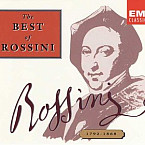
Album: The Best of Rossini (1829)
Play Video

Songfacts®:

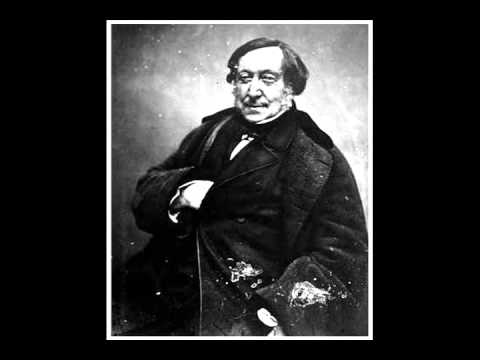
  • "William Tell" is an opera in four acts by Gioachino Rossini to a French libretto by Etienne de Jouy and Hippolyte Bis. Rossini had high hopes of this opera about a legendary Swiss bowman. He considered it his masterpiece from which he could retire but because of its four-hour length and concerns it was glorifying a revolutionary figure, the opera flopped. Later the overture from it struck bulls eye and became Rossini's best known work.
  • William Tell was a folk hero of disputed historical authenticity who is said to have lived in the canton of Uri in Switzerland in the early 14th century. After refusing to salute the Habsburg badge at Altdorf on Lake Lucerne, he was sentenced to shoot an apple from his son's head. This he did, before shooting the tyrannical Austrian ruler Gessler, thus symbolizing his people's refusal to submit to external authority. Johann Wolfgang von Goethe learned of the Tell saga during his travels through Switzerland between 1775 and 1795 and gave the idea to his friend Friedrich von Schiller, who in 1803-04 wrote the play William Tell. Rossini used Schiller's play as the basis for his opera.
  • Rossini virtually retired from music after writing this opera though he did compose "Petite messe solennelle" a piece that belies its title as it lasts nearly two hours. Instead he concentrated on his hobby of cooking and produced a score of recipes such as Thrush and Chestnut soup.
  • Today, the opera is remembered mostly for its famous overture, especially the high-energy galloping finale, which is particularly familiar through its use in the American radio and television shows of The Lone Ranger. Several portions of the overture were used prominently in the film A Clockwork Orange.
  • The overture features the cor anglais musical instrument, which is an alto oboe, pitched a fifth lower (in F) than the normal oboe. The cor anglais has many famous solos in the orchestral repertoire, including Berlioz's "Symphonie fantastique" (1830) and Dvorák's "New World" symphony (1893).
  • Rossini was not only famous as a writer of comic operas, but was also renowned for his wit. On one occasion the composer congratulated the diva Adelina Patti with the words "Madame, I have cried only twice in my life, once when I dropped a wing of truffled chicken into Lake Como and once when for the first time I heard you sing."

Comments: 2

  • Michael from Bradford, EnglandThe William Tell Overture, or rather the last 3'28" minutes, was used by the Piltdown Men for their "Piltdown Rides Again" (a play on "The Lone Ranger Rides Again").
  • Michael from Bradford, EnglandIt is "Petite Messe Solonelle"
see more comments

Editor's Picks

Bob Daisley

Bob DaisleySongwriter Interviews

Bob was the bass player and lyricist for the first two Ozzy Osbourne albums. Here's how he wrote songs like "Crazy Train" and "Mr. Crowley" with Ozzy and Randy Rhoads.

David Bowie Leads the Society for Prevention of Cruelty to Long-Haired Men

David Bowie Leads the Society for Prevention of Cruelty to Long-Haired MenSong Writing

Bowie's "activist" days of 1964 led to Ziggy Stardust.

Al Jourgensen of Ministry

Al Jourgensen of MinistrySongwriter Interviews

In the name of song explanation, Al talks about scoring heroin for William Burroughs, and that's not even the most shocking story in this one.

Linda Perry

Linda PerrySongwriter Interviews

Songwriting Hall of Famer Linda Perry talks about her songs "What's Up" and "Beautiful," her songwriting process, and her move into film music.

Danny Clinch: The Art of Rock Photography

Danny Clinch: The Art of Rock PhotographySong Writing

One of rock's top photographers talks about artistry in photography, raising funds for a documentary, and enjoying a County Fair with Tom Waits.

Boy Bands

Boy BandsFact or Fiction

From NKOTB to 1D, how well do you know your boy bands?