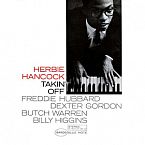
Growing up in the '40s and '50s in Chicago, Herbie Hancock was around street vendors, including the "watermelon men," who peddled the fruit. This provided the title and musical inspiration for the song. In the liner notes to his Takin' Off album, Hancock wrote: "In reflecting on my childhood, I recalled the cry of the watermelon man making his rounds through the back streets and alleys of Chicago's South Side. The wheels of his wagon beat out the rhythm on the cobblestones."
This is one of the most famous jazz compositions ever recorded. Hancock was just 22 when he released it on his first album, Takin' Off. The song bubbled under at #121 on the Hot 100 in March 1963, but a cover by Mongo Santamaria landed at #10 in April, bringing the song, and Hancock, widespread acclaim.
Santamaria was a Cuban percussionist and bandleader known for his 1959 song "Afro-Blue," which John Coltrane recorded. Hancock's collaborator Donald Byrd suggested the song to Santamaria, who changed it from a hard bop to a Latin soul-jazz hybrid, giving the song a wide crossover appeal. Hancock played piano on this version, which features Santamaria's congas and a trumpet solo by Marty Sheller. Francisco "Kako" Baster played timbalero on the track, Ray Lucas was the drummer. It set the stage for more songs blending elements of Cuban music and soul, which became a popular combination in the next few years.
Hancock's rendition features Freddie Hubbard on trumpet and Dexter Gordon on tenor saxophone. Gordon starred (as a tenor sax player) in the 1986 movie Round Midnight. Hancock also had a role in the film and did the score, for which he won an Oscar.
Hancock's career took off from here. He joined Miles Davis' band and made groundbreaking music on his own, including his 1964 album Maiden Voyage and 1965 set Cantaloupe Island. Royalties from "Watermelon Man" gave him the freedom to experiment, and he did, moving into fusion in the '70s and taking a turn at electronic music in the '80s, which resulted in the hit song "
Rockit."
The soul singer Gloria Lynne added lyrics to this song in 1965, taking the song to #62 US. The words, which she wrote, are all about how much she digs the watermelon man. It's a sultry vocal, but it seems she just likes his fruit.
In an interview with Uncut magazine, Herbie Hancock said he wrote the song as a result of something else his collaborator Donald Byrd told him. "He said, 'half the record is for you. The other half, that's for the record company. There has to be some kind of form that people are used to hearing, like blues. People know blues. Nobody knows your tunes, they're not going to help sell the record, and that's their business.'"
Hancock started to think, "Wait a minute! Horace Silver also sells a lot of records, funky jazz things. I can write a funky jazz thing."
But Hancock wanted something really authentic. "I thought about my own childhood in a Black neighborhood, and the watermelon man coming through the cobblestone alleys," he said. "His horse-drawn wagon would go over the cobblestones and he had a little song, but it wasn't very singable. I started thinking about the woman yelling, 'Hey, watermelon man!' That's how I got the melody. The rhythm was inspired by the wagon wheels going over the cobblestones."