Don't Believe The Hype

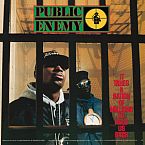
Album: It Takes a Nation of Millions to Hold Us Back (1988)
Charted: 18
Play Video

Songfacts®:

  • In the '80s, Public Enemy often found themselves defending not just themselves, but rap music in general. They were accused of being militant racists; rap music was seen by some in the media as a haven for thugs and criminals. In "Don't Believe The Hype" they fire back with a screed explaining that Black pride doesn't equal white hatred; that their music is intelligent and progressive, not a passing fad.

    The group's rapper/"hype"-man Flavor Flav put it more succinctly at one of their 1988 concerts when they performed the song: "Those lying motherf----s from the press. They stink. They want Public Enemy banned from this country!"
  • According to group leader Chuck D, the song was influenced by a 1988 book by Noam Chomsky called Manufacturing Consent: The Political Economy of the Mass Media, which looks at how propaganda and be disseminated in the media, leading to distortions of the truth.
  • Chuck D and Flavor Flav wrote the song with two members of Public Enemy's "Bomb Squad" production team: Hank Shocklee and Eric "Vietnam" Sadler. It was the second single from their second album, It Takes a Nation of Millions to Hold Us Back, following "Bring The Noise."
  • The Long Island rap group Leaders Of The New School got their name from a line in this song:

    Leader of the new school, uncool
    Never played the fool, just made the rules


    The breakout star from that group was Busta Rhymes, whose name was suggested by Chuck D. (inspired by a college football player named Buster Rhymes). Leaders Of The New School were mentored by Public Enemy and released their debut album in 1991 and appeared the next year on the Tribe Called Quest classic "Scenario."
  • I'm going' to my media assassin
    Harry Allen, I gotta ask him


    Harry Allen was one of the first rap journalists, and also the public relations director for Public Enemy, or as they called him, their "Media Assassin." He delivers the line "don't believe the hype" after his shout-out in the song.
  • Like many Public Enemy songs, "Don't Believe The Hype" was built by layering samples. The main drum riff comes from a 1973 song called "Synthetic Substitution" by Melvin Bliss, and the horn squeal is from James Brown's 1971 song "Escape-Ism."
  • Chuck D takes a stab at the radio station practice of "dayparting" in the part that starts:

    In the daytime the radio's scared of me

    Around this time (1988) it was common practice for radio stations to play hip-hop songs only at night so they wouldn't disturb people listening at work. So during the day you'd be likely to hear Anita Baker and Luther Vandross, but at night they'd be replaced by the likes of Public Enemy and Bobby Brown.

Comments

Be the first to comment...

Editor's Picks

Gary Brooker of Procol Harum

Gary Brooker of Procol HarumSongwriter Interviews

The lead singer and pianist for Procol Harum, Gary talks about finding the musical ideas to match the words.

Don Felder

Don FelderSongwriter Interviews

Don breaks down "Hotel California" and other songs he wrote as a member of the Eagles. Now we know where the "warm smell of colitas" came from.

Allen Toussaint - "Southern Nights"

Allen Toussaint - "Southern Nights"They're Playing My Song

A song he wrote and recorded from "sheer spiritual inspiration," Allen's didn't think "Southern Nights" had hit potential until Glen Campbell took it to #1 two years later.

Donnie Iris (Ah! Leah!, The Rapper)

Donnie Iris (Ah! Leah!, The Rapper)Songwriter Interviews

Before "Rap" was a form of music, it was something guys did to pick up girls in nightclubs. Donnie talks about "The Rapper" and reveals the identity of Leah.

Al Kooper

Al KooperSongwriter Interviews

Kooper produced Lynyrd Skynyrd, played with Dylan and the Stones, and formed BS&T.

Emilio Castillo from Tower of Power

Emilio Castillo from Tower of PowerSongwriter Interviews

Emilio talks about what it's like to write and perform with the Tower of Power horns, and why every struggling band should have a friend like Huey Lewis.