In certain sectors of the 1990s punk rock community, signing to a major label was considered "selling out," a badge of dishonor. Green Day did it and caught blowback from fans who preferred they stay on an indie label and keep playing club shows.
When Green Day's 1994 album Dookie exploded, record labels went looking for more bands who were outgrowing the scene, particularly in Berkeley, California where Green Day originated. One they found was the ska band Dance Hall Crashers, who signed to MCA and released their first major-label album, Lockjaw, in 1995 (produced by Rob Cavallo, who also produced Green Day). Predictably, they got skewered for abandoning their core fans and "chasing the money."
Another band on the scene was Reel Big Fish, whose lead singer, Aaron Barrett, thought the "sell out" accusations were ridiculous - he was a big Dance Hall Crashers fan and really liked Lockjaw.
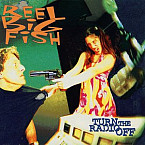
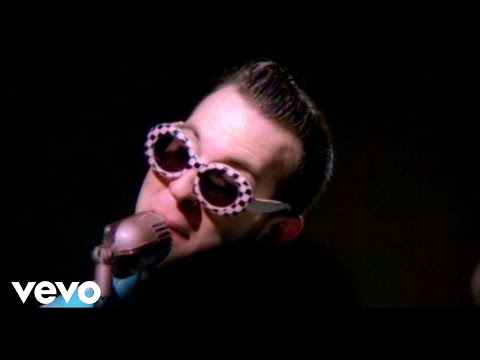
In 1996, Reel Big Fish got their own label deal and released "Sell Out," a song that satirizes the fans who have a problem with bands signing to major labels and, god forbid, evolving.
It's easy to read this song as a critique of bands that go the corporate route, but that's not the case. It's more a send-up of the whole concept of "selling out."
"You heard that word ["sellout"] thrown around so much," Aaron Barrett said on Chris DeMakes A Podcast. "It was just this vague idea I had of how record labels work and how the music industry works. So I wrote this really vague song that can be taken any way you want."
Reel Big Fish was a big part of the ska scene that swelled in 1996 when "Sell Out" was released and continued for another year or two as bands like Rancid, The Mighty Mighty Bosstones and No Doubt got really popular. By the turn of the century, that trend was left for dead, subsumed by dance-pop, hip-hop and R&B. No Doubt adapted, but most of the other bands didn't. Reel Big Fish never had another hit but remained active decades later thanks to a lively stage show and a solid group of core fans.
Reel Big Fish lost their deal with Jive Records in 2006; that same year Jive issued a collection of their music cheekily called Greatest Hit... And More.
The opening horn riff in "Sell Out" mimics the guitar intro to the song "Go" by Dance Hall Crashers as a kind of homage to that band.
The song was written by frontman Aaron Barrett and Scott Klopfenstein, a multi-instrumentalist in the group.
Cultural critics, Chuck Klosterman in particular, have noted how the stigma of "selling out" came to a head in the '90s. A lot of hit had to do with the grunge movement as acts like Nirvana and Pearl Jam became wildly popular by eschewing the mainstream. You wouldn't see them hawking merch or slickening up their sound for radio play. That concept became laughable in the age of social media when bands were expected to use any means necessary to bolster their fan bases and bank accounts. "Sell Out" documents that time in the '90s quite well.
Aaron Barrett realized early on that fans who accuse their favorite bands of selling out will usually grow out of them anyway. "They want you to stay underground just so they can listen to you, and they grow up and they go to college and get married and go get jobs," he told MTV.
The band released this song on Mojo records but they weren't actually signed to the label at the time. After the album was certified Gold, Mojo signed them to a deal with a ceremony where they gave the band one of those big checks with the payment line reading "for selling out" and the signature from "Darth Vader."
If you lived in America and wanted "Sell Out," you had to buy the entire Turn The Radio Off album because it wasn't sold as a single. Perhaps that's appropriate considering the song's subject matter, but this was a common marketing tactic at the time designed to increase album sales, which had a much higher price tag than singles.