Brian Wilson, the Beach Boys' creative force and the mastermind behind "Good Vibrations," told Rolling Stone magazine what inspired the song: "My mother used to tell me about vibrations. I didn't really understand too much of what she meant when I was a boy. It scared me, the word 'vibrations' - to think that invisible feelings existed. She also told me about dogs that would bark at some people, but wouldn't bark at others, and so it came to pass that we talked about good vibrations."
Brian Wilson called this song a "Pocket Symphony," and experimented with it over the course of 17 recording sessions. At the time, it was the most expensive pop song ever recorded, costing about $50,000 to make.
Brian Wilson worked on "Good Vibrations" obsessively. At the time, he stayed home and wrote music while the rest of the band toured. Wilson was just starting a very bizarre phase of his life where he would spend long periods in bed and work in a sandbox. During this period, many considered him a genius because of the groundbreaking songs and recording techniques he came up with.
The song was recorded over a two-month period using top Los Angeles session musicians - the Beach Boys didn't play any instruments on the track. About 90 hours of studio time and 70 hours of tape were used, and at least 12 musicians played on the sessions. It's hard to know whose performances ended up on the record, but some of the musicians involved were Glen Campbell (lead guitar), Hal Blaine (drums), Larry Knechtel (organ) and Al de Lory (piano).
Brian Wilson played bass when the Beach Boys went on the road, but he brought in Carol Kaye to play bass guitar and Lyle Ritz to play upright bass on these sessions. Kaye recalled in a
Songfacts interview, "He did the very first take on that with Ray Pohlman at Goldstar and scrapped that. And the other 12 dates I'm playing on - that's 36 hours - he did not change that bass part all during that time. He changed all the rest of the music, he didn't change the bass part. This is what he wrote. It was both bass players at that point - I'm playing the upper part and Lyle's playing the lower part. If you listen to jazz, that's the feel that he wrote."
Beach Boys lead singer Mike Love wrote the lyrics for this song, which
he told Songfacts were "basically a flowery poem." The song seems to describe a really good acid trip, and while there is nothing specifically in the lyrics about drugs, Love admits that the psychedelic vibe was an influence on his words. Said Love: "It was this flowery power type of thing. Scott McKenzie wrote "
If you're going to San Francisco, be sure to wear some flowers in your hair," and there were love-ins and all that kind of thing starting to go on.
So the track, the music of 'Good Vibrations,' was so unique and so psychedelic in itself. Just the instrumental part of it alone was such a departure from what we have done, like 'Surfin' USA' and 'California Girls' and 'I Get Around' and 'Fun, Fun, Fun,' all of which I had a hand in writing. I wanted to do something that captured this feeling of the track and the times, but also could relate to people. Because I thought that the music was such a departure that who knows how well it would relate to Beach Boys fans at that time.
The one thing that I figured is an absolute perennial is the boy/girl relationship, the attraction between a guy and a girl. So I came up with that hook part at the chorus. It didn't exist until I came up with that thought. Which is 'I'm pickin' up good vibrations, she's giving me the excitations.' 'Excitations' may or may not be in Webster's Dictionary, however, it rhymes pretty well with 'good vibrations.' It was kind of a flower power poem to suit the times and complement the really amazingly unique track that Cousin Brian came up with."
The unusual high-pitched sound in this song was produced using an electro-theremin, which produces a similar sound to a traditional theremin, an instrument that uses electric current to produce sound (you don't touch a theremin to play it, but move your hand across the electric field). The theremin was invented in 1919, but was very hard to play, and ended up being used mostly as a sound effects device.
Brian Wilson was familiar with the instrument, as it was used to create eerie sounds in low budget horror movies like The Day the Earth Stood Still and It Came from Outer Space. When he put cellos on "Good Vibrations," he envisioned an unusual high frequency sound to go along with them, and he thought of the instrument. Wilson couldn't track down a real theremin, but found an inventor named Paul Tanner who'd been a trombonist with the Glenn Miller Orchestra between 1938-'42. Tanner had developed a similar device with Bob Whitsell called an electro-theremin, which unlike a regular theremin, had no antennas. Tanner was brought in to play the device on the recording.
A huge challenge was re-creating the sound of the theremin for live performances. On the road, they used a modified synthesizer with a ribbon controller that Mike Love would play. In the '90s, another inventor named Tom Polk created a device called a tannerin, which created a similar sound using a sliding knob and manual volume control. This was much easier to play, and Brian Wilson used it for his 1999 comeback tour.
When Wilson went back to work on the Smile album, he used the tannerin on his new version of "Good Vibrations," which appeared on the 2004 album. The device was seen at the 2012 Grammy Awards when The Beach Boys performed the song.
Brian Wilson called this song "the summation of my musical vision. A harmonic convergence of imagination and talent, production values and craft, songwriting and spirituality." He wrote it while on LSD, which explains why the song is the musical embodiment of a spectacular acid trip.
According to Wilson, Capitol Records didn't want to release "Good Vibrations" as a single because they thought it was too long at 3:35. He pleaded with them to put it out, and felt vindicated when it shot to the top of the charts.
The song was recorded in fragments - six different Los Angeles studios were used in the recording process, and tape from four of these studios was used in the final cut of the track. It was the first pop song pieced together from parts.
In the next few years, The Beatles did a lot of this, combining bits of various unfinished songs to make one complete track.
Brian Wilson started writing "Good Vibrations" while recording The Beach Boys' Pet Sounds album, and once the album was finished, he focused his energy on the song. Wilson wasn't happy about the poor reviews critics gave Pet Sounds, which today is considered a landmark record, so he worked even harder on "Good Vibrations."
Most of The Beach Boys songs feature the vocals of either Mike Love or Brian Wilson, but guitarist Carl Wilson was the lead singer on this one. Beach Boy drummer Dennis Wilson was initially tagged to sing the lead vocal but eventually brother Carl was chosen. Dennis claimed to have played the organ on the "na na na na na na" build up.
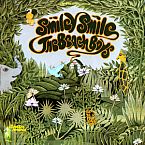
The song was the beginning of what was going to be an album called Smile. Brian Wilson recorded the album in about 50 sessions, but it was never released. Considered a "lost album," Wilson finally finished it in 2004. When he played the album on tour that year, "Good Vibrations" got a rousing response.
"Good Vibrations" was the last US #1 hit for The Beach Boys until "
Kokomo" went to #1 22 years later, setting the record for longest gap between #1 hits on the Hot 100. This record was broken by Cher when "
Believe" hit #1 in 1999, 25 years after her previous chart-topper, "
Dark Lady."
In the '80s, Sunkist used this song in popular commercials for their orange soda ("I'm drinking up good vibrations, Sunkist orange soda taste sensation..."). The vocalist on these spots was
Jim Peterik, who was working as a jingle singer at the time but would later form Survivor and co-write all of their hits, including "
Eye of the Tiger." Peterik and Brian Wilson would later cross paths when they worked together on the Beach Boys comeback song "
That's Why God Made the Radio."
In 2005, a Broadway musical called Good Vibrations opened. The show was based on Beach Boys songs, but failed to find an audience; it closed less than three months later.
Brian Wilson was the only songwriter credited on this track until a 1994 lawsuit awarded Mike Love composer credit for his contributions to the lyrics on this and 34 other Beach Boys songs. Love maintains that Murry Wilson (Brian's father), handled the publishing details and screwed him out of the songwriting credits.
Todd Rundgren covered "Good Vibrations" in 1976 on his
Faithful album. True to the album's name, Todd went to great lengths to reproduce every vocal and instrumental aspect of the song (along with several other '60s hits). Rundgren's almost-exact copy was a minor hit, reaching #34 in the US.
Two other versions of the song charted... barely. A an instrumental rendition by Hugo Montenegro reached #112 in 1969, and The Troggs (of "
Wild Thing" fame) reached #102 in 1975 with their cover.
There is, however, another #1 hit called "Good Vibrations," a
rap song by Marky Mark and the Funky Bunch that hit the top spot in 1991. Marky Mark is Mark Wahlberg, who became much more famous as an actor.