Clash City Rockers

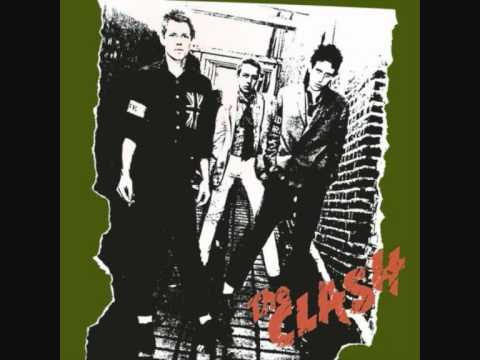
Album: The Clash US Version (1978)
Charted: 35
Play Video

Songfacts®:

  • "Clash City Rockers" was written by singer Joe Strummer and guitarist Mick Jones, the de facto lead writing duo for The Clash, and the lyrics continue many of the themes of their first self-titled album, encouraging the listener to rebel against authority and avoid the trap of a dead-end job ("So don't complain about your useless employment, jack it in forever tonight").

    As an alternative the song suggests making the most of your life and not let anything or anyone stop you ("Or burn down the suburbs with the half-closed eyes, you won't succeed unless you try"). It also includes a bold statement of defiance against the band's critics, stating "You better leave town if you only wanna knock us, nothing stands the pressure of the clash city rockers!"
  • The middle section of this song is based musically on the nursery rhyme "Oranges and Lemons," and the lyrics feature references to Australian R&B band The Groove ("the bells of the Groove") David Bowie ("the bells of Old Bowie"), Gary Glitter ("the bells of Gary Glitter") and Prince Far-I ("the bells of Prince Far-I").

    The Clash were always quick to acknowledge the Jamaican reggae artist Prince Far-I as a big influence, particularly his 1976 album Under Heavy Manners.
  • The song was recorded in CBS Studios London in late 1977 as a follow-up non-album single release after the success of "Complete Control" in September 1977. According to reports, the sessions were fractious, with Mick Jones and bassist Paul Simonon having had a massive argument at the end of the Get Out of Control tour. With the two men not on speaking terms, Joe Strummer had to shuttle between the two, relaying instructions on how the song went and what to play.
  • The subtle piano vamping behind the main riff is believed to have been played by Mick Jones. The main guitar riff itself is a slight reworking of the main riff from the Who song "I Can't Explain", a riff that the band would use many times as the basis for songs - including "Guns on the Roof" and "Capital Radio."
  • Scheduled for release in February 1978, The Clash's manager Bernie Rhodes decided the original recording sounded too flat, and demanded that producer Micky Foote increase the pitch and speed slightly. They didn't tell the band about this, and Mick Jones only found out about it when he played one of the first copies of the single at a house party, and according to roadie Johnny Green "he went absolutely mental."

    The whole band were incredibly angry that this had happened behind their back, and there were severe consequences. Foote never again worked with the band, Rhodes would be sacked as manager by November of the same year (only to return in 1981), and the original mix of the single would be used for all subsequent releases, including on the 1979 re-issue of their first album.
  • The song was first played live in August 1977 in Mont de Marsan on the Clash's European tour, and it remained a firm live staple until the end of the band in 1985 - often as an opening song, before London Calling became the de facto opening song from about 1980 onwards. A live version recorded at the Orpheum Theatre in Boston in September 1982 features on the live compilation album From Here to Eternity.
  • This has been covered several times, including by US rock band Saves the Day for the 1999 tribute album City Rockers (itself named after the "Clash City Rockers" song) and by Jakkpot for the Backlash tribute album.
  • The outro riff is very similar to the main guitar riff of "Caroline" by Status Quo, released five years earlier in 1973.

Comments: 2

  • Roman Adams from Bend OregonJesus Christ I love this song so much it just gives me good vibes when I hear it .
  • Zabadak from London, EnglandReached #35 in the UK
see more comments

Editor's Picks

Does Jimmy Page Worship The Devil? A Look at Satanism in Rock

Does Jimmy Page Worship The Devil? A Look at Satanism in RockSong Writing

We ring the Hell's Bells to see what songs and rockers are sincere in their Satanism, and how much of it is an act.

Bryan Adams

Bryan AdamsSongwriter Interviews

What's the deal with "Summer of '69"? Bryan explains what the song is really about, and shares more of his songwriting insights.

Rush: Album by Album - A Conversation With Martin Popoff

Rush: Album by Album - A Conversation With Martin PopoffSong Writing

A talk with Martin Popoff about his latest book on Rush and how he assessed the thousands of albums he reviewed.

Spooner Oldham

Spooner OldhamSongwriter Interviews

His keyboard work helped define the Muscle Shoals sound and make him an integral part of many Neil Young recordings. Spooner is also an accomplished songwriter, whose hits include "I'm Your Puppet" and "Cry Like A Baby."

Gary Brooker of Procol Harum

Gary Brooker of Procol HarumSongwriter Interviews

The lead singer and pianist for Procol Harum, Gary talks about finding the musical ideas to match the words.

Who's Johnny, And Why Does He Show Up In So Many Songs

Who's Johnny, And Why Does He Show Up In So Many SongsSong Writing

For songwriters, Johnny represents the American man. He has been angry, cool, magic, a rebel and, of course, marching home.