(White Man) in Hammersmith Palais

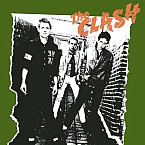
Album: The Clash (US version only) (1978)
Charted: 32
Play Video

Songfacts®:

  • The "Hammersmith Palais de Danse" was a famous music venue in Hammersmith, London, that hosted, among numerous others, The Sex Pistols, David Bowie, The Cure or The Rolling Stones. It was shut down on April 1 2007; the final gig was played by post-punk band The Fall.
  • Joe Strummer is the "white man" in this song. His lyrics were inspired by a visit to a reggae "All Niter" in which he wasn't very impressed by the performances of Dillinger, Leroy Smart and Delroy Wilson, and also received some aggro over being the only white guy in a room. He had called for white people to protest in the same way he had seen black people protest at Notting Hill in the lyrics of "White Riot," but this night was proving to him that the cultural mix he longed for was a long way off on both sides. The night ended with him attempting to stop several guys stealing some white girls' handbags.
  • This was one of Joe Strummer's favorites - in the post-Clash era he continued to play it with his new band The Mescaleros, and it was also played at his funeral. >>
    Suggestion credit:
    Martin - Rostock, Germany, for above 3
  • The final verse deals with Strummer's disillusionment with the exploding Punk scene, and how the bands were too busy fighting to actually set about growing the scene and making Punk Rock a worldwide phenomenon ("The new groups are not concerned with what there is to be learnt, they're all too busy fighting for a good place under the lighting").

    He also takes a spiteful dig at The Jam, who in 1977 had broken out and were threatening The Clash's popularity, accusing them essentially of selling out and trying to go for style to achieve better sales ("Burton suits, hah, you think it's funny? Turning rebellion into money").
  • The Clash were clearly quite nervous about recording the song, as it was a massive step into the unknown for them - unlike with "Police and Thieves," this was a heavily reggae-influenced track both written AND recorded by a white rock group.

    "We were a big fat riff group, like rock solid beats," noted Joe Strummer. "We weren't supposed to do something like that."

    The gamble worked - it became one of their most popular songs, and remained until his death Strummer's favorite song that he'd ever written - one he'd even have played at his funeral.
  • The studio recording features lead bass playing from Paul Simonon and a harmonica solo from Mick Jones.

Comments: 7

  • Dr Syn from UokIt’s definitely about The Jam, but what does it mean? Does it mean that the new group are turning rebellion into money? Or does it mean that the new group think The Clash are funny because they are perceived to be turning rebellion into money?

    Anyway, CHOON!
  • Mick Easingwood from Wakefield, West Yorkshire, Uk. The line about "new group's not being concerned about what there is to learn. They got Burton suits, you think it's funny, turning rebellion into money." This is a direct dig at the punk groups who were "selling out" or had no political conscience and The Jam in particular. The Jam had been thrown off The White Riot Tour, for refusing to loan some of their equipment to the minor support acts. The song was written in the summer of 1977 after The White Riot Tour had just ended. It was also after the legendary Hammersmith Palais All Nighter featuring Delroy Wilson, Four Tops, Dillinger, etc on May 30th.
    The short lived "power pop" fad lasted a couple of months at the start of 1978 and has no relevance to this Clash classic whatsoever.
  • Pompey Skin from ThailandThe comment is not about The Jame. It referred to the new Power Pop movement that was starting in the UK with groups such as the Pleasers. The Jam were a hardly a new group by this time.
  • Deethewriter from Saint Petersburg, Russia Federation"Strummerville" by Stiff Little Fingers: One of the more heartfelt several Strummer RIP songs – this time with a reference to "(White Man) In Hammersmith Palais": "And if music seems mundane / It's cos the companies get their own way / And all the young bands seem to say / Please turn our rebellion into money…"
  • Tim from Springfield, MaHaha very true, and thanks for the comment!
  • Jon from Hackney, United KingdomProbably years late, but I'll try to answer Tim: It's probably because it is such a Joe-being-pi**ed-off song. I mean, I love it, but understand if others don't, so much. He (Joe)does slag off just about everyone, after all (bless him).
  • Tim from Springfield, MaWhy hasn't anyone commented on this song yet?! It's one of my all time favorite Clash songs, and I just registered because it deserves a comment
see more comments

Editor's Picks

Does Jimmy Page Worship The Devil? A Look at Satanism in Rock

Does Jimmy Page Worship The Devil? A Look at Satanism in RockSong Writing

We ring the Hell's Bells to see what songs and rockers are sincere in their Satanism, and how much of it is an act.

Bryan Adams

Bryan AdamsSongwriter Interviews

What's the deal with "Summer of '69"? Bryan explains what the song is really about, and shares more of his songwriting insights.

Rush: Album by Album - A Conversation With Martin Popoff

Rush: Album by Album - A Conversation With Martin PopoffSong Writing

A talk with Martin Popoff about his latest book on Rush and how he assessed the thousands of albums he reviewed.

Spooner Oldham

Spooner OldhamSongwriter Interviews

His keyboard work helped define the Muscle Shoals sound and make him an integral part of many Neil Young recordings. Spooner is also an accomplished songwriter, whose hits include "I'm Your Puppet" and "Cry Like A Baby."

Gary Brooker of Procol Harum

Gary Brooker of Procol HarumSongwriter Interviews

The lead singer and pianist for Procol Harum, Gary talks about finding the musical ideas to match the words.

Who's Johnny, And Why Does He Show Up In So Many Songs

Who's Johnny, And Why Does He Show Up In So Many SongsSong Writing

For songwriters, Johnny represents the American man. He has been angry, cool, magic, a rebel and, of course, marching home.