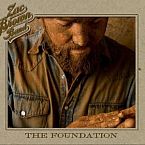

Album: The Foundation (2008)
Charted: 25
Play Video

Songfacts®:

  • In this song, Zac Brown says adios to Georgia and heads to the topics for a getaway where he rolls a fat one and plays his guitar on the beach, all with his toes in the water and ass in the sand. When his money runs out, the local ladies lose interest ("the senoritas don't care-o when there's no dinero") and he heads back home. But life is still good: He grabs a lawn chair and a Pabst Blue Ribbon beer, finds a lake and dips his toes in the Georgia clay.
  • Brown co-wrote this tropical treat with his bass player, John Driskell Hopkins, and his friend, Wyatt Durrette, who co-wrote a number of Zac Brown Band hits and worked on "Beautiful Crazy" for Luke Combs. Brown told Billboard Durrette called him at about six in the morning, "Which either meant that something was wrong or that somebody was up late partying."

    "He said, 'I got my toes in the water, ass in the sand and we gotta write a song about it.' That's kind of how that one started."
  • The music video, directed by Darren Doane, introduces a character called "Flody Boatwood," whom Brown describes as a lovable, dirty Georgia kind of guy. In the video, he gets a winning scratch-off ticket and dreams of his tropical getaway. When he breaks out of his reverie, he decides to just buy beer and ice with his winnings, which are just $50.

    Flody is played by Jake Bartol, who worked audio for Zac Brown Band. For a while, when the band performed the song, he would show up on stage in character. Bartol reprised his role in the 2010 video for "Knee Deep."
  • The song was inspired by co-writer Wyatt Durrette's 30th birthday vacation in Key West, Florida. He explained to AOL's The Boot: "I went to the Keys with four of my friends for four days. On the morning of the third day, I turned to my friends and said, 'I've got my toes in the water, ass in the sand, not a worry in the world, a cold beer in my hand. Life is good today, life is good today.' I said that whole line. So I called Zac to tell him that we needed to start working on this song."

    Zac Brown added: "I had played a show in Atlanta and had gotten out at two or three in the morning. I'd driven back to my house, which was an hour-and-a-half drive. It was 5:30 in the morning, and my house phone rang. It was Wyatt. He was at the beach, as he often is. He loves to be at the ocean. He starts to look like he's from the Middle East after he gets back up from the fair-weather months. That was the beginning of it all. I don't know how long after that it was when we actually finished it. I remember [working on the song] in a hotel room somewhere, at the bonfire at my farm, and out on the road. It all kind of runs together. When we were getting ready to record it, we ended up taking it into the studio to John Hopkins, my bass player's place.

    Durrette continued: "One of the things that happens a lot with our songs is both of us have lots of books and journals and lots of things in our computers - pieces of songs that were started and not quite finished. We don't want to overthink a song. The 'adios and vaya con dios' part was another song. It's happened with a handful of songs - we take little pieces from things we've written in the past, and if they fit melodically and they make sense we put it in the song."
  • Shawn Mullins, known for his hit "Lullaby," came up with the closing lyrics, earning him a writing credit on the song that he tried to decline. In a Songfacts interview with Mullins, he told the story: "When they were making their first record, it was going to be out on their own label, Southern Ground Records. Zac had a little plot of land near Lake Oconee, Georgia, and he had a little bar and restaurant with his dad. He didn't have much going yet, but he had a bunch of songs. When he and those guys wrote and recorded 'Toes' and 'Chicken Fried' and a few other tunes, he asked me to come by to have a listen. I'd known him since he was 14 and we're somewhat from the same area of Georgia. I drove over to the studio and was listening. I thought it all sounded great. The recordings were really good, and not using Nashville players - I thought that was cool. He was using his own guys from Georgia and it just gave it a different sound, kind of like Charlie Daniels' band would have done years ago - West Texas guys have this other flavor that wasn't so manufactured sounding.

    So I loved the recordings but I remember when I heard 'Toes,' there was something about the lyric near the end that I gave him some advice on, and that's really all I had meant to do. I told him when you've run out of money in the song, you follow it with your standard chorus:

    'I've got my toes in the water and my ass in the sand.'

    I said, 'But you wouldn't have your ass in the sand anymore because you're back in Georgia, and you're down by the lake, and we have red clay here.' All our lakes are kind of muddy. I said, 'You ought to say something like, 'Put my ass in a lawn chair and my toes in the clay, not a worry in the world and PBR on the way.'' So you're drinking redneck beer instead of those fancy drinks on the islands: 'Life is good today, life is good today.'

    He was like, 'Oh man, that's great! I love it.' I said, 'Yeah, consider something like that.'

    I didn't plan on being a co-writer - it was a freebie as far as I am concerned. Those people I can't stand, the ones who come in and then take part of the song. But it was probably a couple of months later, maybe even a little bit longer, he called me and said he had gotten a record deal and a publishing deal and they were trying to figure out publishing loyalties between the people that had helped to write it, and he wouldn't feel right about not giving me a piece of that because they had been performing that song and they recorded it the exact way that I threw it out there. We argued about it for half an hour, and I was like, 'Zac, I wouldn't feel right about that.' And he was like, 'Come on man, it's the payoff verse at the end. You've got to.' He kept trying to give me an even split and I didn't want it, and we ended up settling on something less than an even split that he was OK with and I guess I was OK with, and it did actually help me out quite a bit over the next few years."
  • This topped Hot Country Songs, the Zac Brown Band's second #1 in three attempts. Their debut chart entry "Chicken Fried" previously spent two weeks at the summit. This meant that the Zac Brown Band were the first group to ascend to the pole position with two of their first three chart entries since The Dixie Chicks, whose second and third chart entries, "There's Your Trouble" and "Wide Open Spaces," were both #1s in 1998.
  • This song came top of a list of the most-requested country dance club songs of 2009 released by Marco Club Connection, a dance venue marketing company.

Comments: 2

  • Nancy B Farndell from FlWhat does GA and PBR stand for?
  • Megan from Stevenson, AlEvery time you hear it, you just can't help but sing it! Love it!!!
see more comments

Editor's Picks

Graham Nash

Graham NashSongwriter Interviews

Graham Nash tells the stories behind some of his famous songs and photos, and is asked about "yacht rock" for the first time.
Ralph Casale  - Session Pro

Ralph Casale - Session ProSongwriter Interviews

A top New York studio musician, Ralph played guitar on many '60s hits, including "Lightnin' Strikes," "A Lover's Concerto" and "I Am A Rock."

Rob Halford of Judas Priest

Rob Halford of Judas PriestSongwriter Interviews

Rob Halford dives into some of his Judas Priest lyrics, talking about his most personal songs and the message behind "You've Got Another Thing Comin'."

Corey Hart

Corey HartSongwriter Interviews

The Canadian superstar talks about his sudden rise to fame, and tells the stories behind his hits "Sunglasses At Night," "Boy In The Box" and "Never Surrender."

Incongruent Opening Acts

Incongruent Opening ActsSong Writing

Here's what happens when an opening act is really out of place with the headliner, like when Beastie Boys opened for Madonna.

Edwin McCain

Edwin McCainSongwriter Interviews

"I'll Be" was what Edwin called his "Hail Mary" song. He says it proves "intention of the songwriter is 180 degrees from potential interpretation by an audience."